 Seoul City Guide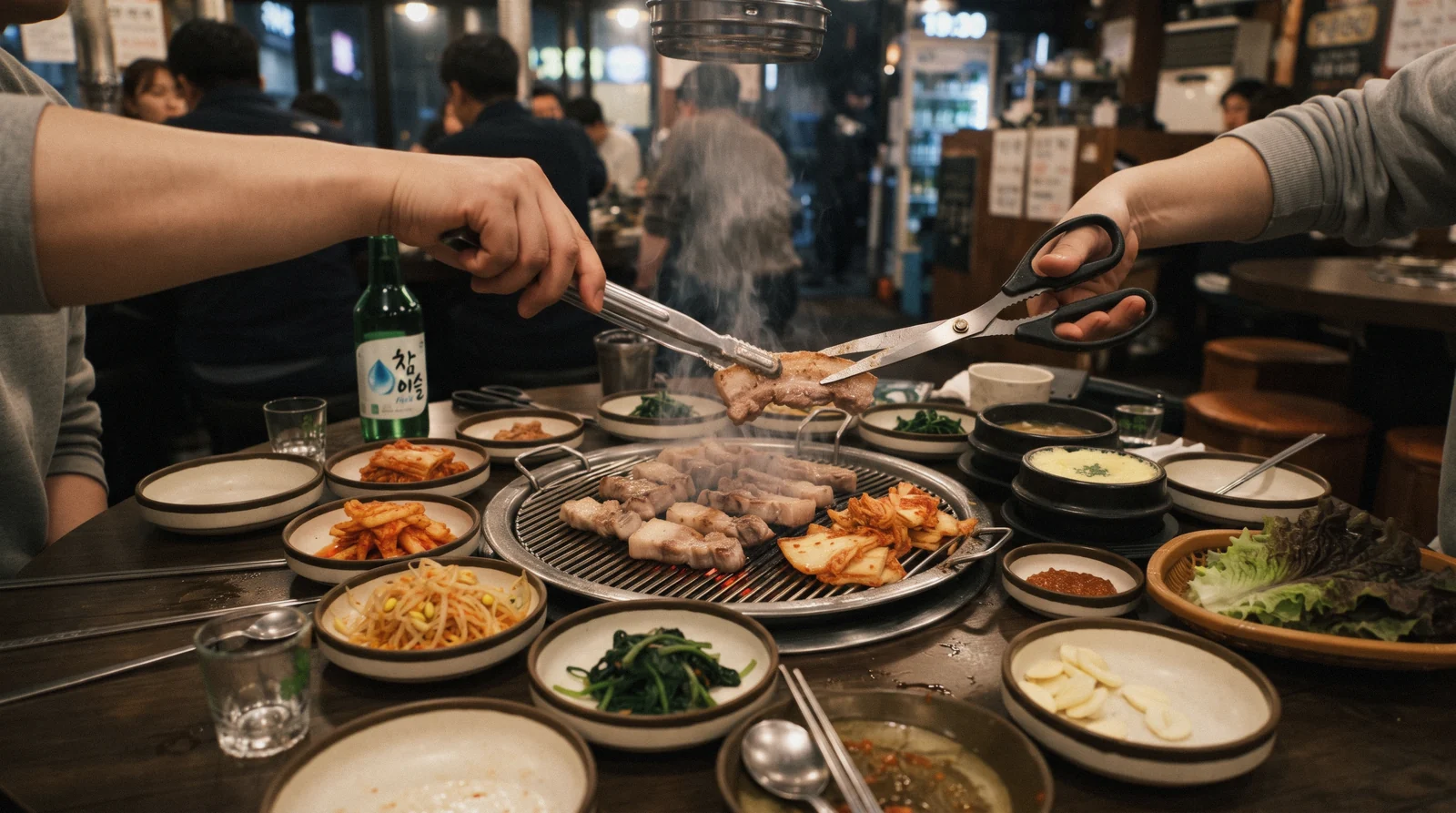
Where to Eat in Seoul, by Meal Rather Than by District
Where to eat in Seoul is less a list of restaurants than a set of decisions: which meal, which price bracket, and whether you are willing to sit at a counter. This page sorts the city's eating by occasion — market lunch, barbecue dinner, late-night stew — with what each costs and where it is best. For the rest of the trip, see what to do in Seoul.
Quick answer Four meals, four price brackets, four districts
Eating in Seoul divides into four kinds of meal, and each has a natural home. Lunch belongs at a market counter for ₩8,000 to ₩15,000. Dinner belongs at a barbecue table for ₩18,000 to ₩30,000 a head. Street food is a grazing meal of ₩3,000 to ₩6,000 pieces. And the late-night category — stews, chicken, noodles at midnight — is where the city actually eats after work.
Key takeaways
- Cheapest good meal in the city: a counter at Gwangjang Market, about ₩10,000 including a drink.
- Barbecue is priced per portion of meat, not per person, and two portions feed two people — how ordering works.
- Side dishes, water and often rice are free. Nobody charges for banchan and refills are asked for, not paid for.
Four Meals, Priced
How eating in Seoul divides by occasion, with the price a head and the district that does each best. Prices are what we saw on menus and stall boards when we checked in Q3 2026.
| Meal | Price per head | Where it is best | Hours |
|---|---|---|---|
| Market counter lunch | ₩8,000–₩15,000 | Gwangjang, Tongin, Mangwon | 11:00–14:00 |
| Korean barbecue dinner | ₩18,000–₩30,000 | Hongdae cheap, Gangnam dear | 18:00–23:00 |
| Street food grazing | ₩3,000–₩6,000 a piece | Myeongdong carts, Namdaemun | 16:00–22:30 |
| Late-night stew or chicken | ₩15,000–₩25,000 | Hongdae, Jongno back streets | 22:00–02:00 |
| Modern Korean, sit-down | ₩25,000–₩45,000 | Ikseon-dong, Hannam | 18:00–22:00 |
A visitor eating one market lunch and one barbecue dinner a day spends about ₩30,000 to ₩45,000 on food — the food line in what a day in Seoul costs.
How Ordering Works
Four conventions do most of the work, and none of them requires Korean.
Banchan — the small side dishes that arrive unasked — are free, refillable and part of the meal rather than a starter. Asking for more of the kimchi is ordinary behaviour, not an imposition.
Many dishes are priced for two. Stews, barbecue portions and chicken dishes often carry a two-portion minimum, which is why solo diners gravitate to noodle counters and gimbap shops, where single servings are the norm.
Water is free and self-service, usually from a dispenser by the door with steel cups stacked beside it. Nobody brings it to the table.
And payment happens at the counter by the door rather than at the table. You get up, take the bill with you, and pay on the way out. Tipping does not exist, in restaurants or anywhere else — more on that.
What to Eat, If You Have Three Days
A short list that covers the range without repeating itself.
Bindaetteok and mayak gimbap at a market counter, for the oldest and cheapest version of Seoul eating. Samgyeopsal — pork belly grilled at the table with lettuce, garlic and ssamjang — for the standard Korean dinner, and the one meal everyone remembers. Kalguksu, hand-cut noodles in anchovy broth, for a cheap winter lunch. Dakhanmari, a whole chicken boiled at the table in a broth you finish with noodles, for a group. And gamjatang or budae jjigae late at night, the stews that exist because people needed to eat after drinking.
One of these should be eaten in a place with no English menu, which is easier than it sounds: point at the neighbouring table, or use the photographs on the wall. Vegetarians have a harder time and their own page.
How to Find Somewhere Good
Ignore Google reviews, which are thin in Korea, and use Naver Map, which is where Koreans actually rate restaurants. The ratings are dense, recent and unforgiving.
The simplest heuristic works better than any app: at 12:30 on a weekday, walk into the place with office workers queueing and skip the one with empty tables beside it. Korean lunch behaviour is a reliable signal, because the same people eat in the same streets every day.
For a district-level answer, the pattern is consistent. Hongdae is cheapest, Gangnam dearest, Itaewon most international, Ikseon-dong most designed, and the markets are where the city's oldest food survives. Prices in Myeongdong sit above the neighbourhood average because the customers are visitors — a hundred metres off the main lane, the same dish drops by a third.
Where to Start
Three pages that answer the next question, depending on the meal.
Gwangjang Market
The counter lunch, dish by dish with prices: what to order at Gwangjang.
- Food street 09:00–23:00 all year
- ₩8,000–₩15,000 a head
- Shops closed Sundays
Korean barbecue
How the table, the cuts and the pricing work: Korean barbecue explained.
- ₩18,000–₩30,000 a head
- Portions priced for two
- Cheapest in Hongdae
Street food
What the carts sell and when they appear: Seoul street food.
- ₩3,000–₩6,000 a piece
- Carts from 16:00
- Cash still fastest
Eating With Someone Who Orders for You
Four listings that solve the ordering problem — market tastings, a night-time food walk, a vegetarian route and a cooking class in a hanok. Ratings and prices are the operators' own figures.
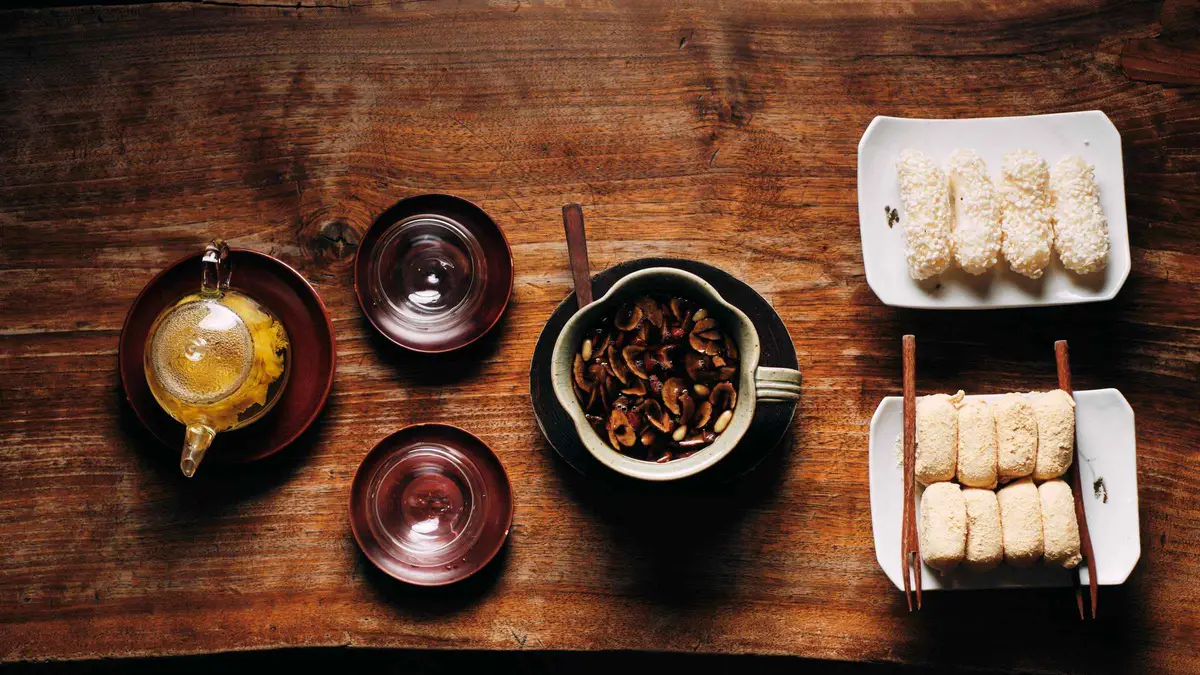 from $97.56
Seoul: Guided Food & Market Tour with 8+ Tastings
Discover Seoul’s hidden foodie gems on a flavorful journey through markets, backstreets, and teahouses, tasting authentic dishes, local snacks, and our surprise Secret Dish along the.
Check Availability from $67.15
Seoul: Night Palace & Market Food Tour with Vehicle
Unwind in Seoul's night glow where history meets flavor. On this small-group tour (max 15), ride between sights, taste generous market dishes, and feel the city come alive with lights and.
Check Availability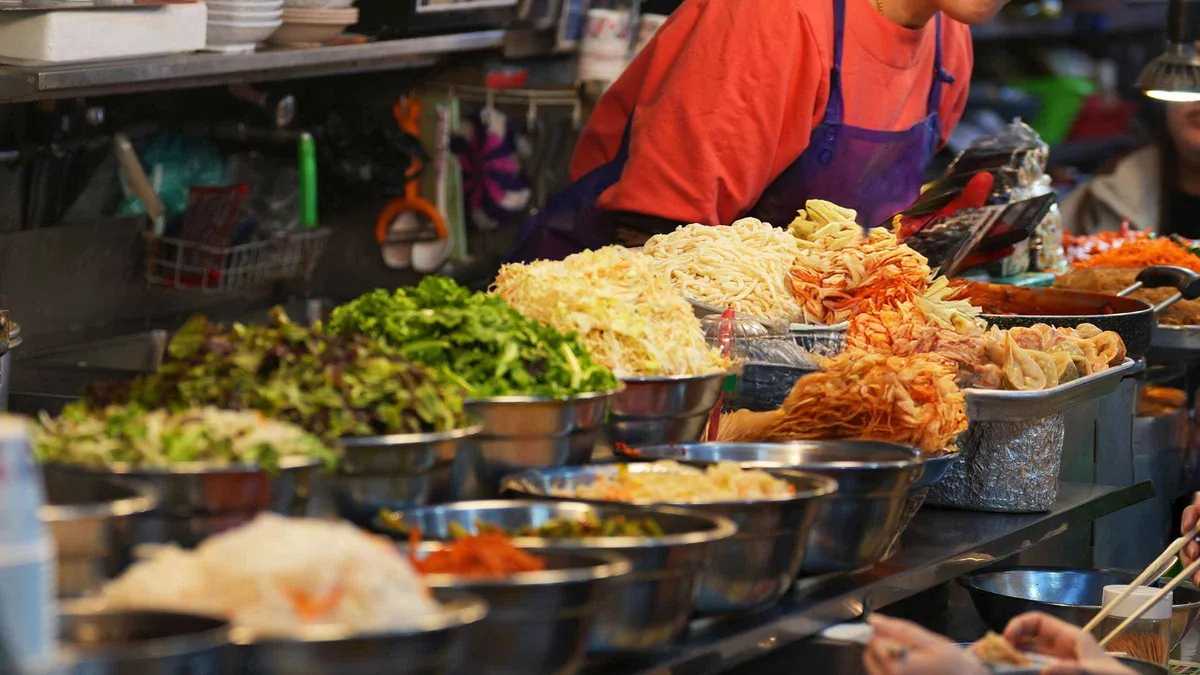 from $89
Seoul: Gwangjang Market Vegan & Vegetarian Food Tour
Explore Gwangjang Market like a local on a vegetarian food tour in Seoul. Taste a range of vegetarian and vegan versions of Korean classics and learn about the stories behind each.
Check Availability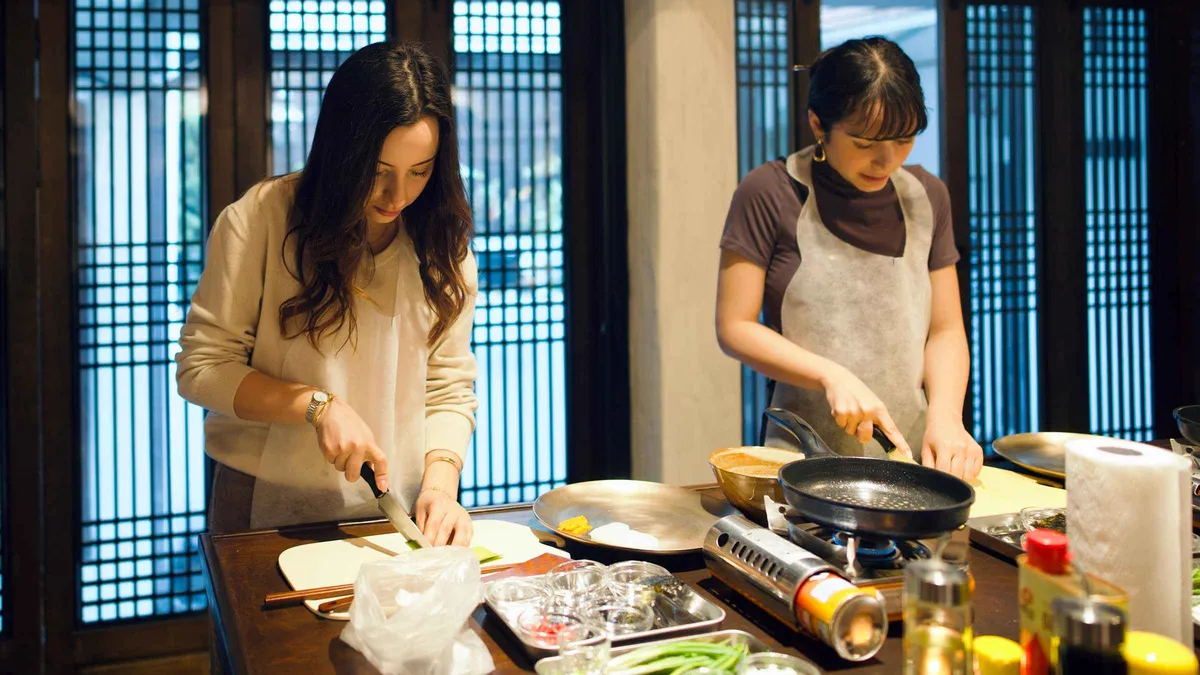 from $102.40
Seoul: Royal Seoul Cooking Class in a 100-Year-Old Hanok
Learn to cook iconic Korean dishes in a 1930s Hanok near Gyeongbokgung. Enjoy a meal in a cozy setting with a max of 6 guests, guided by expert.
Check AvailabilityPrices, ratings and details are the platform's own. Dollar figures are the listed prices. The platform bills in your account's currency.
Eating in Seoul Questions
How much does food cost in Seoul?
A market lunch is ₩8,000 to ₩15,000, a barbecue dinner ₩18,000 to ₩30,000 a head, and street-food pieces ₩3,000 to ₩6,000. Eating well for ₩30,000 to ₩45,000 a day is straightforward.
Are side dishes free in Korea?
Yes. Banchan arrive with the meal, cost nothing and are refillable on request. So is water, usually self-service from a dispenser by the door.
Can I eat alone in Seoul?
Yes, though many dishes are priced for two. Noodle counters, gimbap shops and market stalls all serve single portions; barbecue and stew restaurants often will not.
Do I tip in Seoul restaurants?
No. Tipping is not practised anywhere in Korea and leaving money on the table causes confusion rather than pleasure. More on etiquette.
What should I eat first in Seoul?
A market counter lunch — bindaetteok and mayak gimbap at Gwangjang — followed by table barbecue for dinner. Between them they cover the two poles of eating here.
Is it hard to eat vegetarian in Seoul?
Harder than it looks, because stock and fish sauce are everywhere. It is entirely possible with planning, and the vegetarian page covers the phrases and the places.
How do I find good restaurants?
Naver Map rather than Google, which has thin coverage in Korea. Or use the lunchtime test: at 12:30 on a weekday, follow the office workers.
What is a must eat in Seoul?
Bindaetteok and mayak gimbap at a market counter, samgyeopsal at a table grill, and a late-night stew. Those three cover the range.
Where do the locals eat in Seoul?
At market counters, at barbecue tables in side streets rather than on main lanes, and at noodle and gimbap shops at lunchtime. The lunchtime queue of office workers is the most reliable signal in the city.
Eating in Seoul on Video
A barbecue table and a market counter, filmed — the two poles of eating here.
How To Eat Korean BBQ: A Beginner's Guide
Video: Gothamist9 Helpful Tips on How to Eat Korean BBQ
Video: Rockstar EaterHow to Properly Eat Korean BBQ | Cuisine Code | NowThis
Video: NowThis ImpactVideos are other people's work, embedded for context; nothing here is sponsored.
Prices, hours and terms are set by the venue or operator and confirmed at checkout.
We may earn a commission if you book through one of our links, at no extra cost to you. Full affiliate disclosure