 Seoul City Guide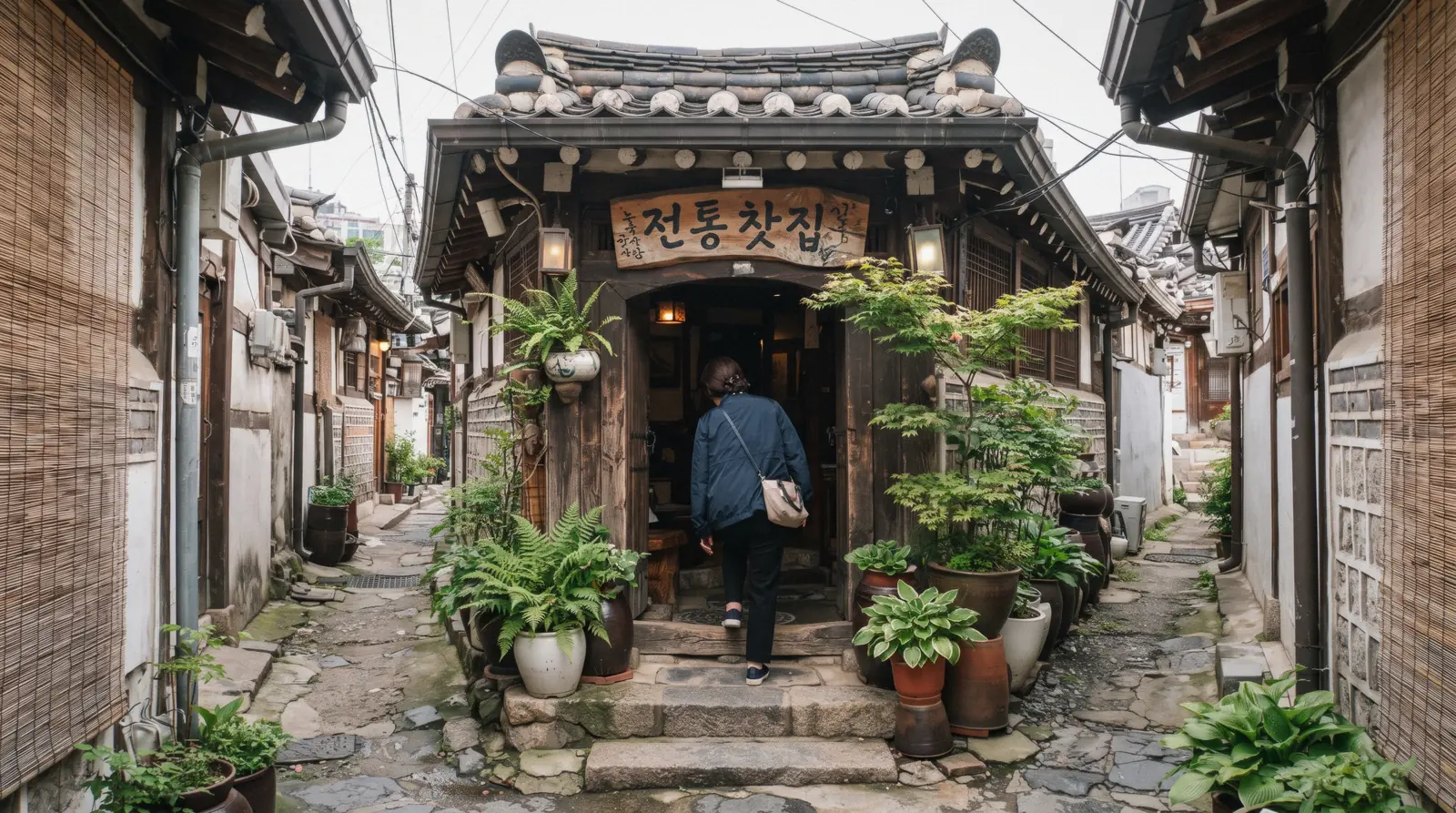
Insadong: Tea Houses, Craft Shops and the Sunday Street
Insadong is the antiques and craft quarter between the palaces and Jongno, and the one district in central Seoul built around tea rather than coffee. This page carries what the street is actually good for, which alleys hold the old tea houses, when it is pedestrianised and how to tell craft from souvenir. For the rest of the city, see what to do in Seoul.
Quick answer Leave the main street; the good part is in the alleys
Insadong is a single long street, Insadong-gil, with a web of alleys off it, and the honest split is this: the main street sells souvenirs, and the alleys hold the tea houses, the galleries and the craft workshops that gave the district its reputation. It runs between the two big palaces, so it works as the lunch and tea stop of a palace morning rather than as a destination of its own.
Key takeaways
- Turn off the main street within the first hundred metres. The tea houses worth sitting in are down alleys barely wide enough for two people.
- At weekends the street closes to cars and fills with stalls; on a weekday it is calmer and the galleries are open.
- It is ten minutes from Gyeongbokgung and eight from Changdeokgung, which is the whole argument for coming here.
What Insadong Is, and What It Was
Insadong was the antiques quarter — the place where scrolls, calligraphy brushes, ceramics and old furniture changed hands, in a neighbourhood that had been home to the government offices of the Joseon court. A good deal of that trade is still here: galleries, brush and paper shops, ceramics studios, and the occasional dealer whose window has a single celadon bowl in it.
What has grown over the top is a souvenir economy, and on the main street it dominates. Cosmetics, keychains, machine-printed 'traditional' goods and the crowds that go with them fill Insadong-gil most afternoons.
The division is geographical and easy to use. Insadong-gil is the shop window; the alleys running east and west off it are where the district still does what it always did. Ssamziegil, the spiral shopping building halfway up, sits between the two — small independent makers arranged around a ramp that climbs four floors, and a reasonable place to buy something made by the person who sold it to you.
What Insadong Is Actually Good For
The four things the district does well, with what each costs and when to do it, from prices displayed when we checked in Q3 2026.
| What | Where | Price | When |
|---|---|---|---|
| Traditional tea house | Alleys off the main street | ₩8,000–₩12,000 a pot | Afternoon, after a palace |
| Hand-made ceramics | Studios and Ssamziegil | From about ₩20,000 | Weekday, when makers are in |
| Galleries and brush shops | North end and side lanes | Free to browse | Weekday afternoons |
| Street stalls and food | Insadong-gil itself | ₩3,000–₩6,000 | Weekends and holidays, when the road closes |
Tea houses serve traditional infusions — omija, jujube, citron, barley — rather than coffee, and most include a small sweet with the pot. Sitting for an hour is normal and nobody hurries you.
The Tea Houses
This is the reason to come. Several old tea houses survive in the alleys, in hanok buildings with wooden floors, low tables and a courtyard, and they serve infusions that most visitors have never had: omija, the five-flavour berry, served cold and startlingly sour; jujube tea, thick and sweet; citron; roasted barley; and dozens of medicinal blends.
A pot runs ₩8,000 to ₩12,000 and comes with a small rice sweet. You take your shoes off at the step in the older houses, sit on a cushion, and stay as long as you like — the business model assumes an hour.
The practical advice is to walk past the first two places you see on the main street and go down an alley instead. The difference in atmosphere between a tea room with a street window and one around a courtyard is the difference between the district's reputation and its reality.
Weekends, When the Street Closes
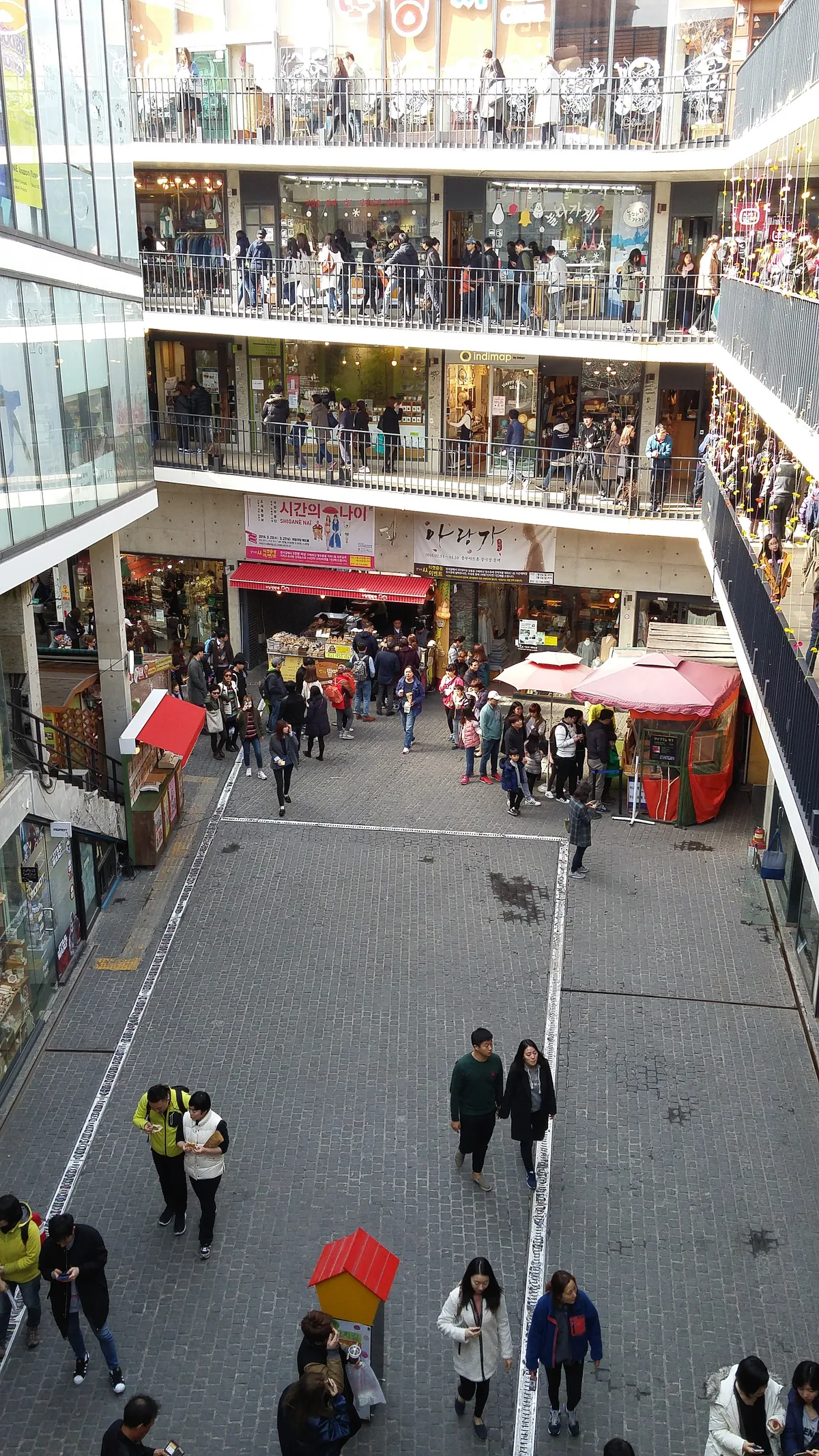
Photo: Christian Bolz (크리스티안 볼츠), CC BY-SA 4.0, via Wikimedia Commons (https://creativecommons.org/licenses/by-sa/4.0)
On Saturdays, Sundays and public holidays Insadong-gil is closed to traffic and the character of the street changes: stalls appear down the middle selling street food and small crafts, buskers and traditional performers set up, and the crowd thickens considerably.
Whether that is an improvement depends on what you came for. For street food, atmosphere and a family afternoon, the weekend is better. For galleries, tea and buying anything considered, a weekday is better — some studios and dealers keep gallery hours and close on Mondays.
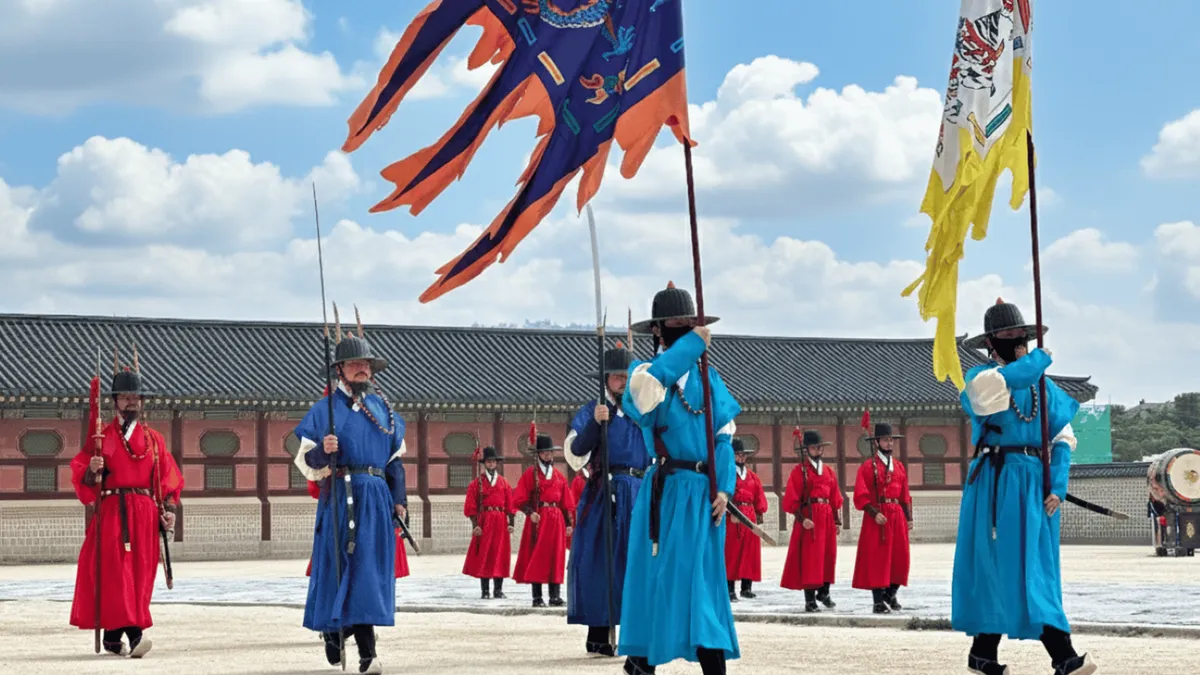
The Sunday guard procession from Gyeongbokgung ends here in the spring and autumn seasons, arriving in the afternoon along the pedestrianised street, which is the one weekend event worth timing a visit around.
Practical Detail
Insadong runs between Anguk station on Line 3, Exit 6, and Jonggak on Line 1, Exit 3 — about six minutes' walk end to end, plus the alleys.
The district sits directly between the palace quarter and Jongno, which makes the standard route obvious: Gyeongbokgung in the morning, Bukchon on the way down, tea in Insadong at three, then Changdeokgung or Gwangjang Market depending on the hour.
Jogyesa, the head temple of Korean Buddhism, is five minutes west of the street and free to enter; in the weeks before Buddha's birthday its courtyard is hung with thousands of paper lanterns, which is the best free sight in central Seoul at that time of year. More on Seoul's temples.
Next Stop from Insadong
Three places within fifteen minutes on foot, in the order a day usually runs.
Changdeokgung
Eight minutes north-east to Changdeokgung — with a Huwon garden slot booked, this is the afternoon.
8 min walkIkseon-dong
Eight minutes east to Ikseon-dong, the same hanok architecture turned into cafés and bars.
8 min walkTours Through the Old Quarter
Guided routes that take in Insadong along with the palaces and markets around it. Ratings and prices are the operators' own figures.
 from $26
Seoul Highlights: Gyeongbok Palace, Insadong & N Seoul Tower
Experience Seoul’s top highlights in one unforgettable day—Gyeongbokgung Palace, Insadong, Gwangjang Market, Namsangol Hanok Village, and panoramic views from N Seoul Tower with a local.
Check Availability from $59
Seoul: Highlights of Seoul Full-Day Tour
Visit the highlights of Seoul, including Gyeongbokgung Palace, Hanok village, The War Memorial of Korea, and Jogyesa Temple in a.
Check Availability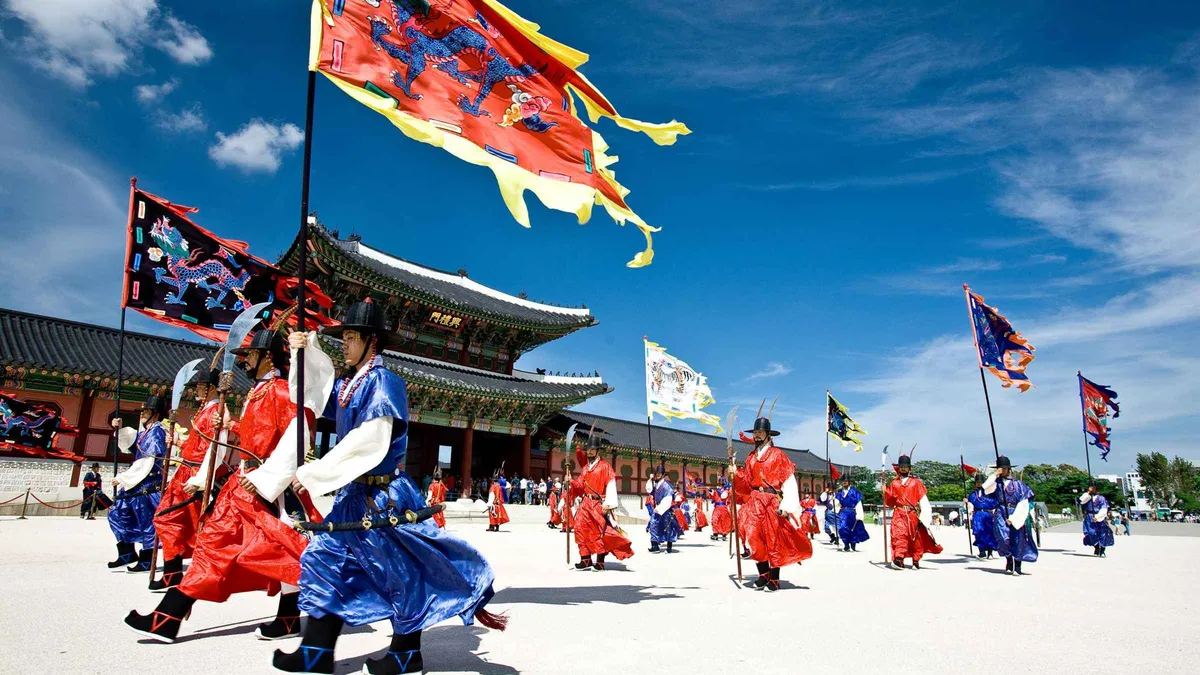 from $33
Seoul: Gyeongbok Palace, Hanok Village, and Gwangjang Tour
See the beautiful northern sides of Seoul as you visit Gyeongbokgung Palace and Hanok village. Later, enjoy a panorama view at Bugak Palgakjeong and try delicious snacks at Gwangjang.
Check AvailabilityPrices, ratings and details are the platform's own. Dollar figures are the listed prices. The platform bills in your account's currency.
Insadong Questions
What is Insadong known for?
Antiques, galleries, calligraphy and paper shops, ceramics studios and traditional tea houses. The main street has become a souvenir strip; the alleys off it still hold the trade the district is named for.
How much is tea in an Insadong tea house?
₩8,000 to ₩12,000 for a pot, usually served with a small rice sweet. Sitting for an hour is expected rather than tolerated.
Is Insadong pedestrianised?
At weekends and on public holidays the main street closes to traffic and fills with stalls and performers. On weekdays it carries cars and is quieter.
Is Insadong worth visiting?
As part of a palace day, yes — it sits between Gyeongbokgung and Changdeokgung and the tea houses are genuinely worth an hour. As a shopping destination on its own, less so.
What should I buy in Insadong?
Ceramics and paper goods from studios or from Ssamziegil, where makers sell their own work from about ₩20,000. Avoid the mass-produced 'traditional' items on the main street.
What is the nearest station to Insadong?
Anguk on Line 3, Exit 6, at the northern end, or Jonggak on Line 1, Exit 3, at the southern end. The street between them takes six minutes to walk.
Why is Insadong famous?
It was the antiques and calligraphy quarter of Seoul, and it still holds galleries, brush and paper shops, ceramics studios and traditional tea houses in the alleys off the main street.
Is Insadong a tourist trap?
The main street largely is — souvenirs and mass-produced 'traditional' goods. The alleys off it are not, and that distinction is the whole point of this page.
Insadong on Video
The main street and the alleys, filmed — the difference is visible.
Insadong, Seoul – Hidden Alleys, Street Food & Secret Restaurant Lane | 4K Walking Tour
Video: Wandering KThe best tea house in Insadong [amwf] #insadong
Video: Andrea&YoungMook안녕커플Insadong Walking Street & Tea House *So Chill*
Video: LIVE TRAVEL ASIAVideos are other people's work, embedded for context; nothing here is sponsored.
Prices, hours and terms are set by the venue or operator and confirmed at checkout.
We may earn a commission if you book through one of our links, at no extra cost to you. Full affiliate disclosure