 Seoul City Guide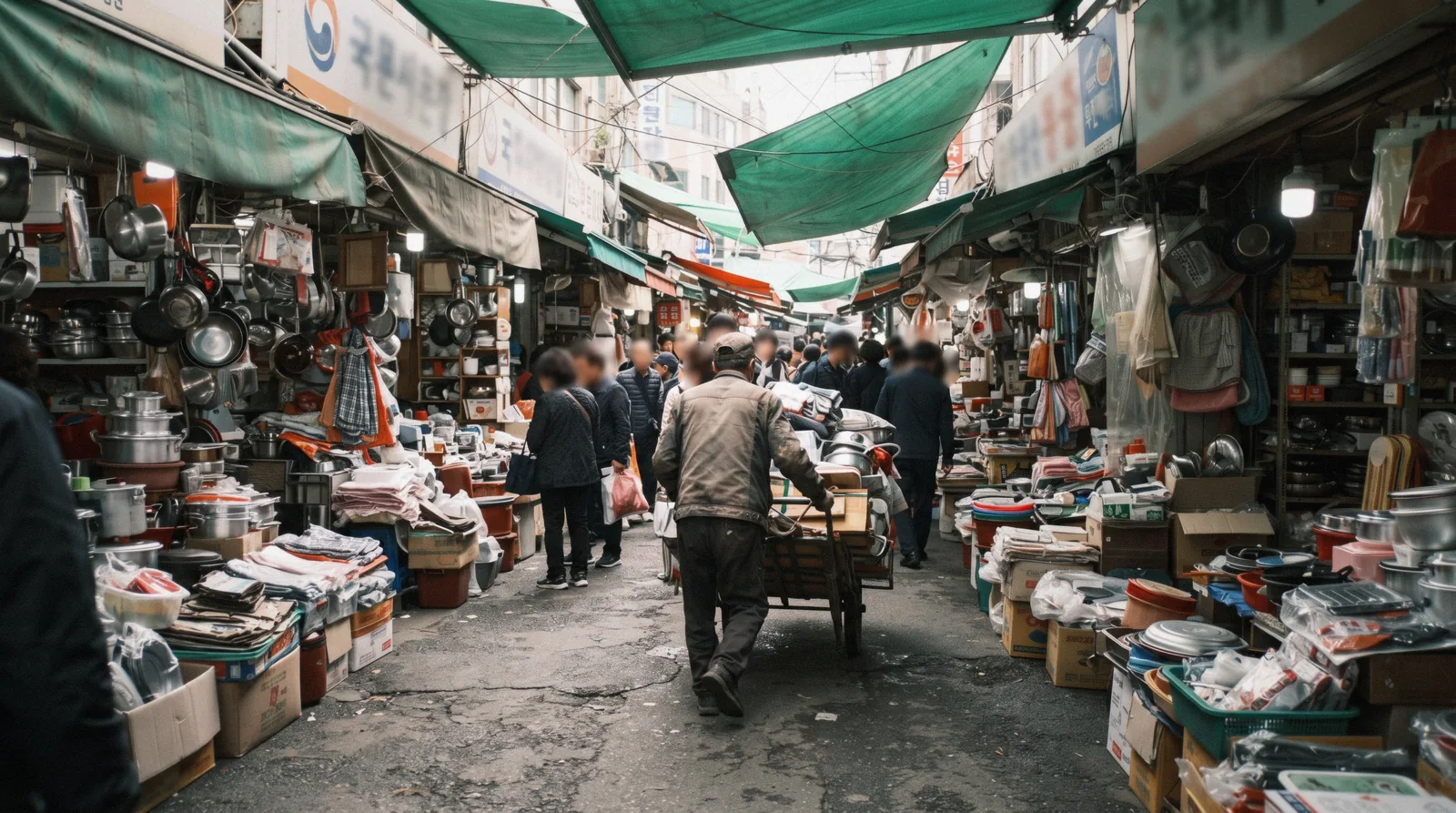
Namdaemun Market: the City's Wholesale Engine
Namdaemun Market is the largest traditional market in Korea, a ten-thousand-stall block beside the old south gate that sells everything and trades through the night. This page carries the opening pattern, the Sunday closure, the alleys worth finding and what separates it from Gwangjang. The wider city is covered in our guide to things to do in Seoul.
Quick answer A wholesale market first, a tourist stop second
Namdaemun is the biggest traditional market in Korea, running for centuries on the ground beside the old south gate, and it is a working wholesale operation rather than a food street. Retail stalls keep daytime hours, the wholesale floors do their real business between about 23:00 and 04:00, and the whole market closes on Sundays. Come for the alleys — ginseng, kitchenware, glasses, children's clothes, cameras — and for a bowl of knife-cut noodles.
Key takeaways
- Eat in the kalguksu alley: a bowl of knife-cut noodles for ₩7,000–₩9,000, served at a bench with the pot boiling in front of you.
- For eating rather than buying, Gwangjang Market is the better address; Namdaemun is where Seoul shops.
- It is twelve minutes from Deoksugung and ten from Myeongdong, which makes it a natural first or last stop of an evening.
Key facts
Opening hours
| Retail stalls | 09:00–18:00 |
|---|---|
| Wholesale floors | 23:00–04:00 |
| Food alleys | 07:00–20:00 |
Closed Sundays.
Admission
- Adult
- Free to enter
- Reduced
- Kalguksu ₩7,000–₩9,000; hotteok and street snacks ₩1,000–₩3,000
- Free
- Walking the ginseng, stationery and camera alleys costs nothing
Planning it
- Time needed
- About an hour, or two with lunch and the alleys
- Address
- 21 Namdaemunsijang 4-gil, Jung-gu, Seoul — Hoehyeon (Line 4), Exit 5 opens into the market
Ten Thousand Stalls With a System
Namdaemun grew up beside Sungnyemun, the great south gate of the old city wall, and has been trading on the same ground since the fifteenth century. What exists now is a dense block of arcades and lanes with somewhere near ten thousand businesses in it, most of them wholesale, many of them making what they sell in workshops above the shopfront.
The organising principle is specialisation by lane. One alley sells nothing but glasses frames; another does children's clothes; another kitchen equipment for restaurants; another ginseng and dried goods; another cameras and lenses; another imported foods. This is why wandering aimlessly here is less rewarding than at Gwangjang — you want to know which lane you are looking for.
The rhythm is also different. Buyers from provincial shops arrive overnight, and the wholesale floors run roughly from 23:00 to 04:00, which is when the volume trade happens. By mid-morning the same market is a retail operation for locals, and by six in the evening much of the wholesale half has shut to sleep before the night shift.
Which Alley Does What
Namdaemun is organised by trade rather than laid out for browsing, so the useful map is a list of specialisations. Compiled from the market's own signage and the official tourism listing, checked in Q3 2026.
| Alley | What it sells | Best time |
|---|---|---|
| Kalguksu alley | Knife-cut noodles, dumplings, barley rice, at benches | 11:00–14:00 |
| Ginseng and dried goods | Red ginseng, dried mushrooms, jujube, honey | Daytime |
| Glasses and eyewear | Frames and same-day lens fitting at prices well below the high street | 10:00–18:00 |
| Children's clothing arcade | Wholesale and retail, floor after floor | Morning |
| Kitchenware and restaurant supply | Steel, pots, plates, the trade's own suppliers | Morning |
| Imported food and camera lanes | Foreign groceries, second-hand bodies and lenses | Daytime |
Wholesale prices generally need volume. As a visitor you are buying at retail, which is still cheap by central-Seoul standards, and haggling is normal on clothing and accessories but not on food.
Eating at Namdaemun
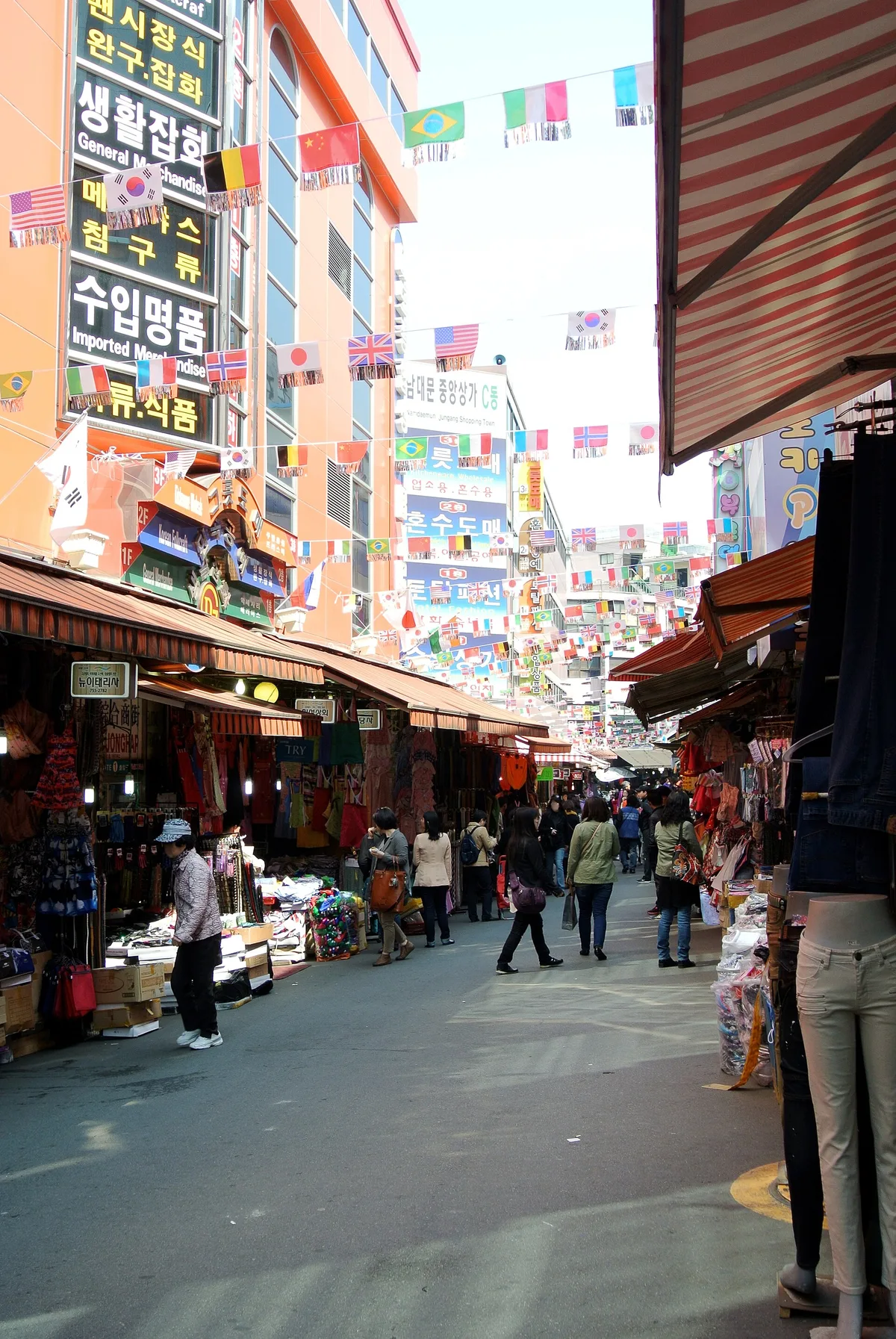
Photo: Adbar, CC BY-SA 3.0, via Wikimedia Commons (https://creativecommons.org/licenses/by-sa/3.0)
The food here is plainer than at Gwangjang and cheaper. Kalguksu alley is the institution: a covered row of benches where the noodles are cut by hand, the broth is anchovy, and the standard order arrives with barley rice and a plate of kimchi you finish with the last of the soup. Seven to nine thousand won, and the queue at noon moves quickly.
Around it you will find galchi jorim — braised beltfish, spicy and boiled down for hours — on a lane known for that dish alone, and hotteok and other griddled snacks sold to shoppers on the move for a thousand or two.
The difference from Gwangjang is the audience. Namdaemun's food alleys feed the people working in the market, so they open early, empty out after lunch, and close before the drinking hours. If you want a market dinner, this is the wrong market.
Sungnyemun, the Gate Next Door
Sungnyemun — the great south gate that gives the market its name — stands on its own island of stone at the western edge, and it is free to visit and open daily except Mondays.
It is National Treasure No. 1, built in 1398, and the structure you see is a reconstruction: an arson attack destroyed the wooden upper storey in 2008, and the rebuilt gate reopened in 2013 after five years of work using traditional methods. There is a changing-of-the-guard ceremony at the gate during the day, smaller than the palace ones.
Walking from the gate into the market and out the other side towards Myeongdong takes about twenty minutes and covers six hundred years of the same commercial ground.
When to Go, and When Not To
Mid-morning on a weekday is the market at its most usable: everything retail is open, the aisles move, and the food alleys are not yet full.
Sunday is the day to avoid entirely — the market closes, and the lanes that are open are a thin remainder. Public holidays are similar. And the overnight wholesale hours, while genuinely interesting, are not a visitor experience: the aisles are full of handcarts moving stock at speed and nobody has time to sell you one of anything.
In July and August the covered lanes are hot and still. In December the market is at its best — the stalls stack winter clothing outside, the hotteok griddles run continuously, and the crowd has somewhere to be.
What a Visit Costs
The market is free to walk and the food alleys are the cheapest lunch in central Seoul. Prices from stall boards and GetYourGuide.
Are you shopping, eating, or working out what to do with an hour near Myeongdong?
| Option | Price | What it gets you | Notes | Book |
|---|---|---|---|---|
| Walking the alleysAnyone at all; the alleys are the attraction and they cost nothing | Free | Retail daytime; closed Sundays | Wholesale 23:00–04:00 | Official site |
| Kalguksu alley lunchEarly risers — this alley starts before most of Seoul does | ₩7,000–₩9,000 | From early morning | Benches, not tables | Official site |
| Street food market tourEvenings that want several markets and somebody ordering | from $73 | 2 hours | Free cancellation 24 h before | Check Availability |
Official ticket-office links are not affiliate links.
Namdaemun Market on the Map
Pinned at the entrance, with the pages for what is nearby.
Next Stop from Namdaemun
Three places within fifteen minutes on foot, in the order that suits an afternoon.
Myeongdong
Ten minutes east to Myeongdong for the evening street-food carts and the shopping streets.
10 min walkDeoksugung
Twelve minutes north to Deoksugung, the only palace open until 21:00 — the obvious end to the day.
12 min walkN Seoul Tower
About 25 minutes, or a short bus ride, up to N Seoul Tower on Namsan for the view over what you have just walked.
25 min walkMarket Walks That Include Namdaemun
Guided routes through the markets and the streets around them. Ratings and prices are the operators' own figures.
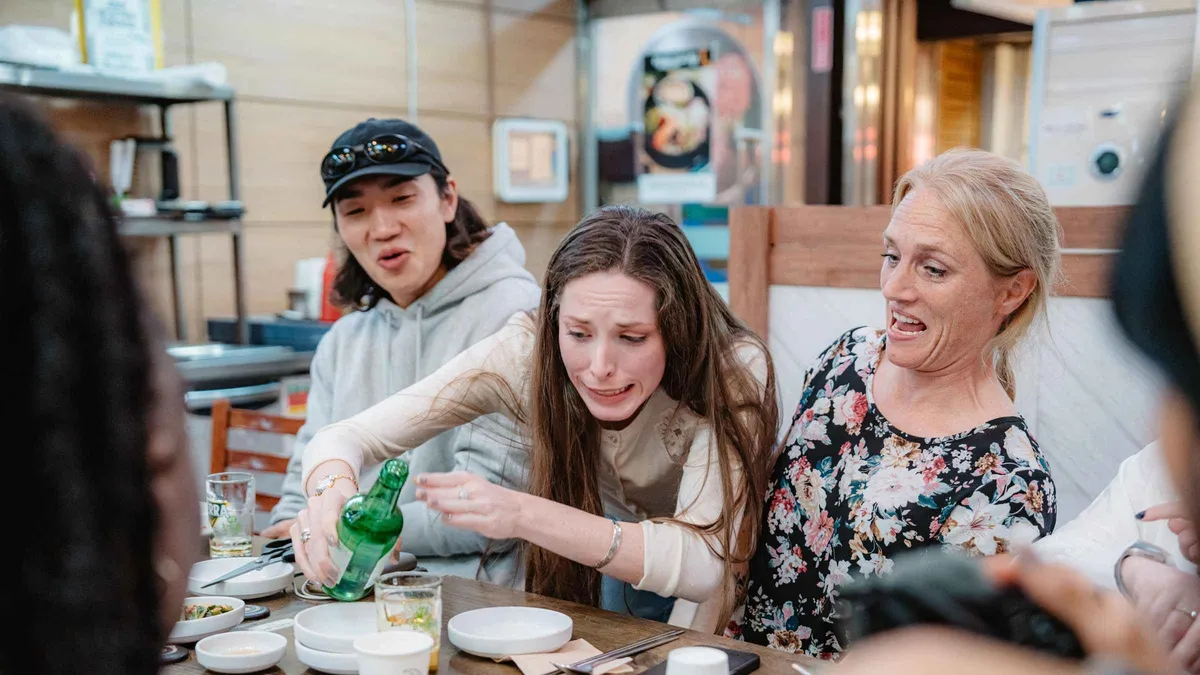 from $73
Seoul Street Food Market Tour
This experience goes beyond delicious food; it's a cultural journey where you'll connect with friendly hosts, engage with local vendors, and bond with fellow.
Check Availability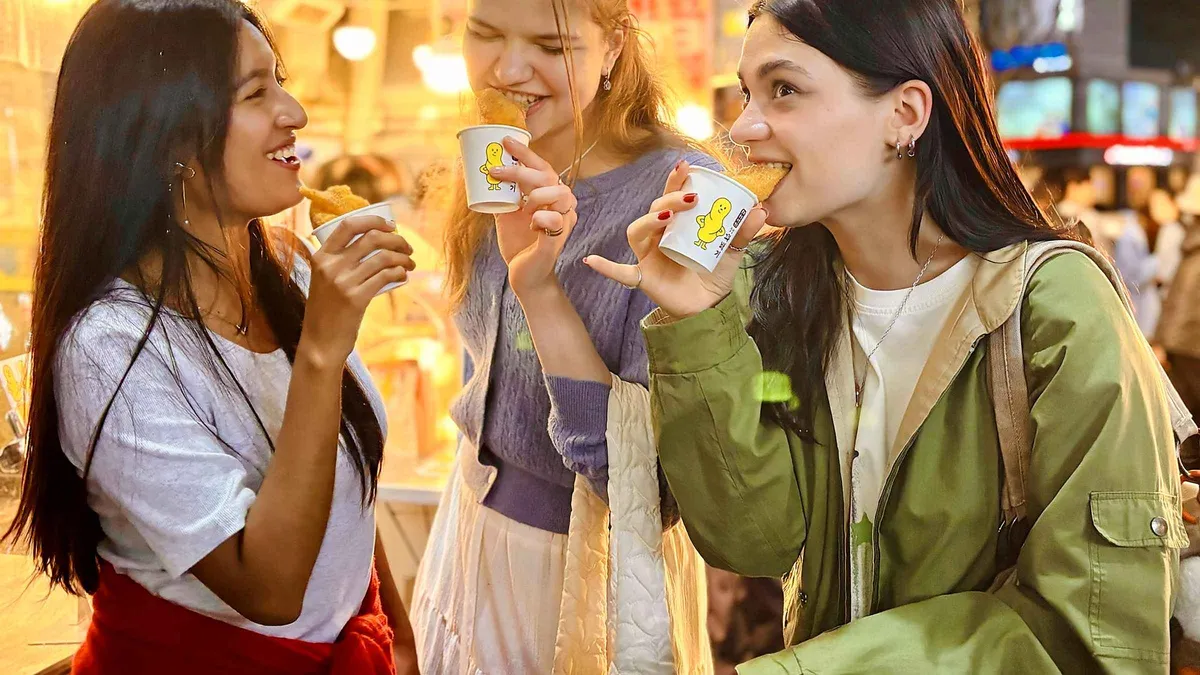 from $67.15
Seoul: Night Palace & Market Food Tour with Vehicle
Unwind in Seoul's night glow where history meets flavor. On this small-group tour (max 15), ride between sights, taste generous market dishes, and feel the city come alive with lights and.
Check Availability from $59
Seoul: Highlights of Seoul Full-Day Tour
Visit the highlights of Seoul, including Gyeongbokgung Palace, Hanok village, The War Memorial of Korea, and Jogyesa Temple in a.
Check AvailabilityPrices, ratings and details are the platform's own. Dollar figures are the listed prices. The platform bills in your account's currency.
Namdaemun Market Questions
What are Namdaemun Market's opening hours?
They vary by trade. Retail stalls broadly keep 09:00 to 18:00, the food alleys open early, and the wholesale floors work overnight from about 23:00 to 04:00. The market closes on Sundays.
Is Namdaemun Market open on Sunday?
No. Sunday is the market's closing day, which catches out visitors who assume a market that trades overnight never shuts.
What should I buy at Namdaemun?
Glasses, kitchenware, children's clothes, ginseng and dried goods are the trades the market is known for, each with its own lane. Prices sit well below the high street, and haggling is normal on clothing.
What should I eat at Namdaemun?
Kalguksu — hand-cut noodles in anchovy broth, ₩7,000 to ₩9,000 with barley rice — in the covered alley the market is known for. Braised beltfish is the other local speciality.
Namdaemun or Gwangjang?
Gwangjang for eating, Namdaemun for buying. Gwangjang's food street runs to 23:00 all year; Namdaemun's food alleys close in the early evening and the market takes Sundays off.
How do I get to Namdaemun Market?
Hoehyeon station on Line 4, Exit 5, which opens directly into the market. Seoul Station and City Hall are both about ten minutes' walk.
Do you negotiate at Namdaemun Market?
On clothing and accessories, yes, and it is expected. On food, no. Prices are already close to wholesale, so the room is small.
Namdaemun on Video
The alleys and the kalguksu benches, filmed.
KOREA VLOG Ep. 4: Street Food Tour of LARGEST Traditional Market in Seoul | Namdaemun Market
Video: Chef Chris ChoThe ULTIMATE Korean STREET FOOD Tour at Namdaemun Market | Seoul, South Korea
Video: DavidsbeenhereKorean Street Food Trip: Myeongdong + Namdaemun Market|Seoul- Myeongdong Street| Namdaemun Market
Video: Sumita Jana vlogVideos are other people's work, embedded for context; nothing here is sponsored.
Prices, hours and terms are set by the venue or operator and confirmed at checkout.
We may earn a commission if you book through one of our links, at no extra cost to you. Full affiliate disclosure