 Seoul City Guide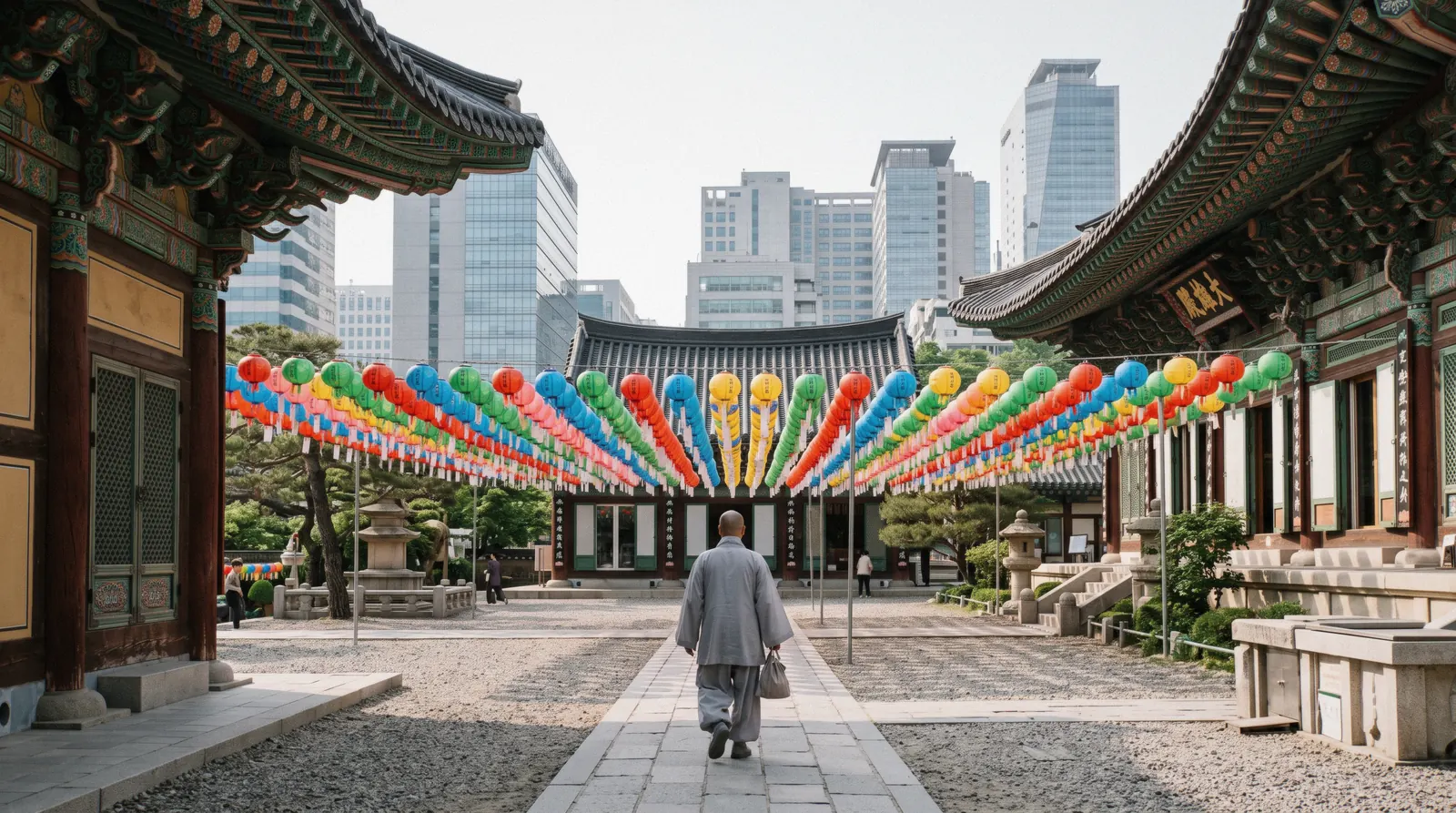
Seoul's Buddhist Temples, and the Templestay Worth Booking
Seoul temples are working religious sites in the middle of a business district rather than monuments — free to enter, open early, and quieter than anything else in the centre. This page covers the two that matter, what a templestay involves and when the lantern season runs. The rest of the city is on things to do in Seoul.
Quick answer Two temples, both free, both working
Seoul has two Buddhist temples a visitor is likely to want: Jogyesa in Jongno, the head temple of the Jogye Order and five minutes from Insadong, and Bongeunsa in Gangnam, founded in 794 and standing directly across an eight-lane road from the COEX convention centre. Both are free, both are in daily use, and both run templestay programmes for anyone who wants the overnight version.
Key takeaways
- Jogyesa is the easy one: free, central, and in the weeks before Buddha's birthday its courtyard is roofed with paper lanterns.
- Bongeunsa pairs with Starfield Library five minutes away — a thousand-year-old temple and a mall atrium in one afternoon.
- A templestay is a real programme with early starts, not a hotel: book it as an experience, not as accommodation.
Jogyesa, in the Middle of Jongno
Photo: Bgag, CC0, via Wikimedia Commons (http://creativecommons.org/publicdomain/zero/1.0/deed.en)
Jogyesa sits in a compound off a busy street five minutes west of Insadong, and it is the administrative head of the Jogye Order, the largest Buddhist order in Korea. That means it is busy in a working sense: monks crossing the yard, services running, offices behind the halls.
The main hall holds three large gilded Buddhas and is open to visitors, who may enter quietly, remove shoes and sit at the back. In the courtyard stands an old white pine and a lacebark pine, both protected, and a seven-storey pagoda holding relics.
What makes it worth planning around is the lantern season. In the weeks before Buddha's birthday, which falls in May, the entire courtyard is hung with thousands of paper lotus lanterns, and the streets around it carry the lantern parade. It is the best free spectacle in central Seoul, and it lasts several weeks rather than a single day.
The temple runs templestay and short 'temple life' programmes in English, and the information centre opposite the main gate handles bookings.
Bongeunsa, Across the Road From COEX
Bongeunsa was founded in 794 and has stood on the slope above what is now Gangnam through every version of the city that has existed since. Today it faces the COEX convention centre across eight lanes of traffic, and that juxtaposition is the single most photographed thing about it.
The compound climbs the hill in terraces: main hall, halls of the disciples, and at the top a twenty-three-metre standing stone Buddha, the largest in the country, with the Gangnam skyline behind it.
It is free and open daily. The temple runs a well-established templestay, including an English-language programme, and holds a regular Sunday service in English — one of the few in the city.
The practical case for going is the pairing. Starfield Library is five minutes away inside the mall, Lotte World Tower is twenty minutes east, and the three together make the only afternoon south of the river that a first-time visitor genuinely needs.
Jogyesa or Bongeunsa
The two central temples compared on what a visitor actually experiences, checked in Q3 2026. Both are free and both are working temples rather than museums.
| Jogyesa | Bongeunsa | |
|---|---|---|
| Where | Jongno, 5 min from Insadong | Gangnam, opposite COEX |
| Founded | Present site since 1910; order's head temple | 794 |
| Setting | Flat urban compound, office towers behind | Terraced hillside, skyline above |
| The sight | Lantern season before Buddha's birthday | 23-metre stone Buddha |
| Templestay | Yes, including short programmes | Yes, including English-language |
| Pairs with | Insadong, the palaces | Starfield Library, the tower |
Neither charges admission, and neither keeps the museum closing days. Ceremonies run at dawn and in the early evening at both, and visitors may attend if they sit at the back and stay quiet.
What a Templestay Actually Involves
Templestay is a national programme, launched around the 2002 World Cup, in which working temples host guests overnight. It is not a hotel arrangement and it is not a retreat in the wellness sense.
The standard shape: you arrive in the afternoon, change into loose temple clothes, take part in a tea ceremony with a monk, attend the evening chanting, sleep on a mat on a heated floor in a shared or simple room, and get up for the dawn service — which is usually around 03:30 or 04:00. Meals are vegetarian, taken in silence in some temples, and served in the formal barugongyang style at others, where you eat everything and clean the bowls with water and a piece of radish.
English-language programmes exist at both central temples and at several outside the city, and the fee is modest — this is not a commercial product and the temples are not trying to make money on it.
What it suits: anyone curious about the discipline rather than the aesthetics, and anyone who wants one night of a Korea that has nothing to do with cities. What it does not suit: a lie-in. Vegetarian visitors will also find the food page useful, since temple cuisine is the most reliable vegetarian eating in Korea.
Where the Temples Fit
Each temple belongs to a different half-day, and each has an obvious neighbour.
Jogyesa and the old quarter
Temple, tea houses and galleries in one walk: Insadong.
- Free
- 5 minutes from Insadong-gil
- Lantern season in May
Bongeunsa and COEX
A thousand-year-old temple and a thirteen-metre wall of books: Starfield Library.
- Free
- 23-metre stone Buddha
- English Sunday service
Vegetarian eating
Temple cuisine is the reliable vegetarian category in Korea: vegetarian and vegan in Seoul.
- Set lunch ₩15,000–₩30,000
- No meat, fish or pungent vegetables
- Reservations advised
Tours That Include a Temple
Routes that take in a temple alongside the palaces or the markets. Ratings and prices are the operators' own figures.
 from $32
Seoul: UNESCO Palace History Tour, Photos & Optional Hanbok
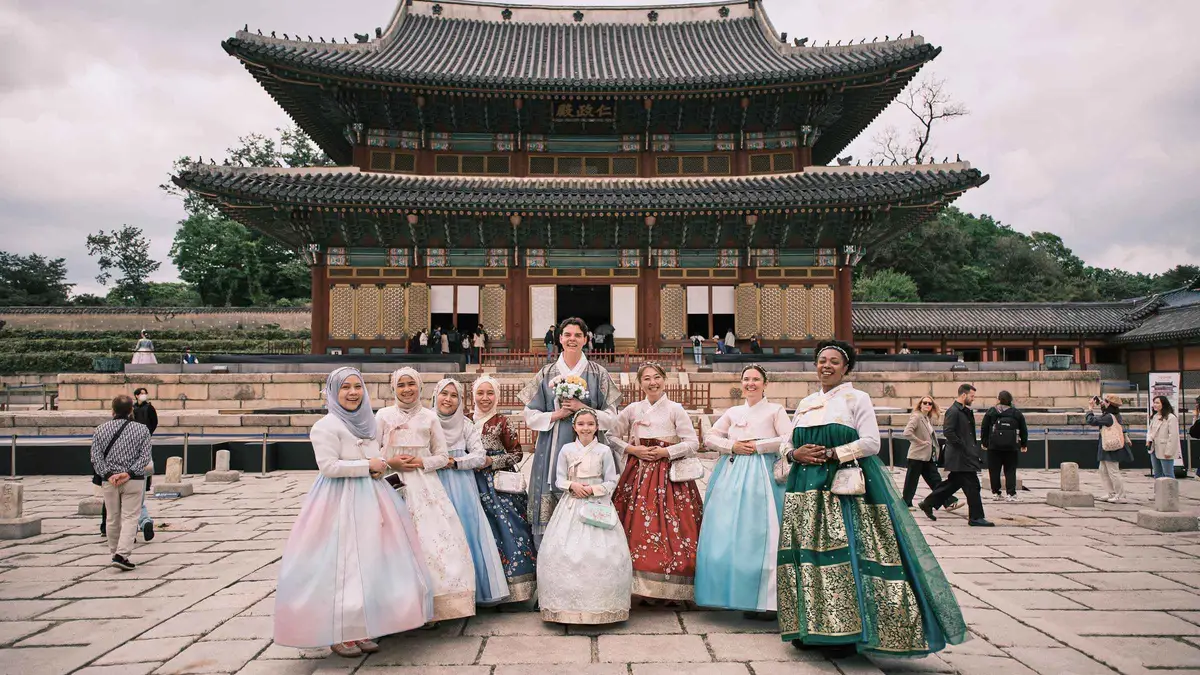
Explore UNESCO-listed Changdeokgung with an English-speaking history guide. Discover royal stories, enjoy casual travel photos, and choose to enhance your experience with optional.
Check Availability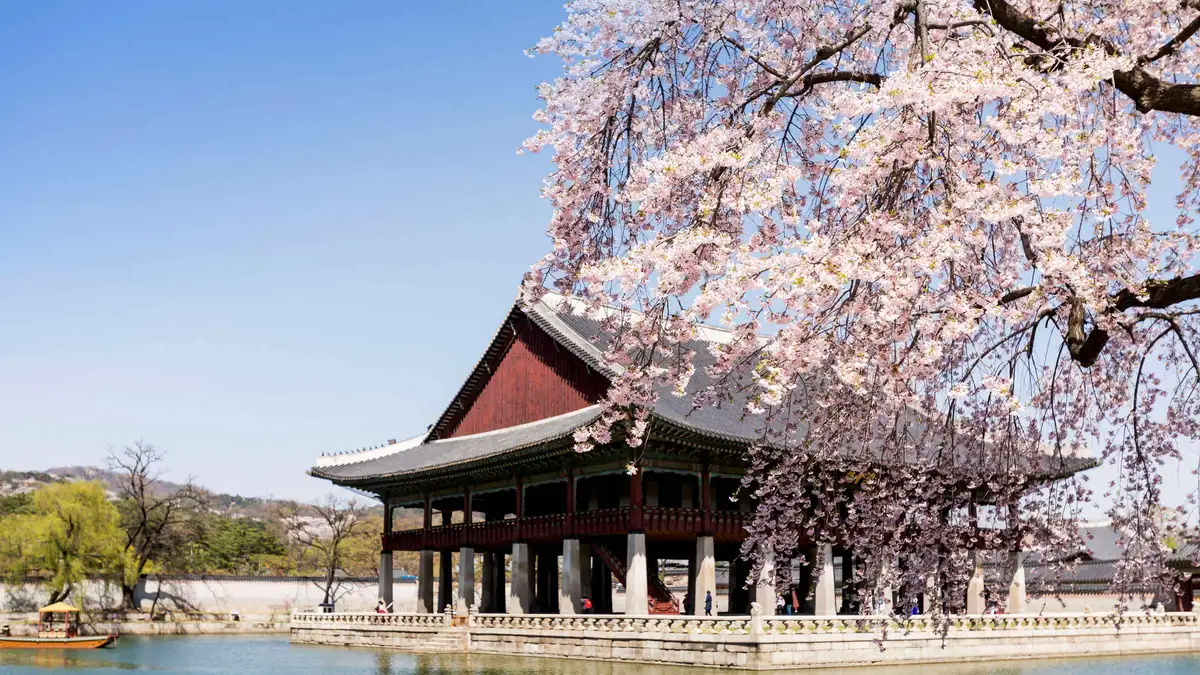 from $59
Seoul: Highlights of Seoul Full-Day Tour
Visit the highlights of Seoul, including Gyeongbokgung Palace, Hanok village, The War Memorial of Korea, and Jogyesa Temple in a.
Check Availability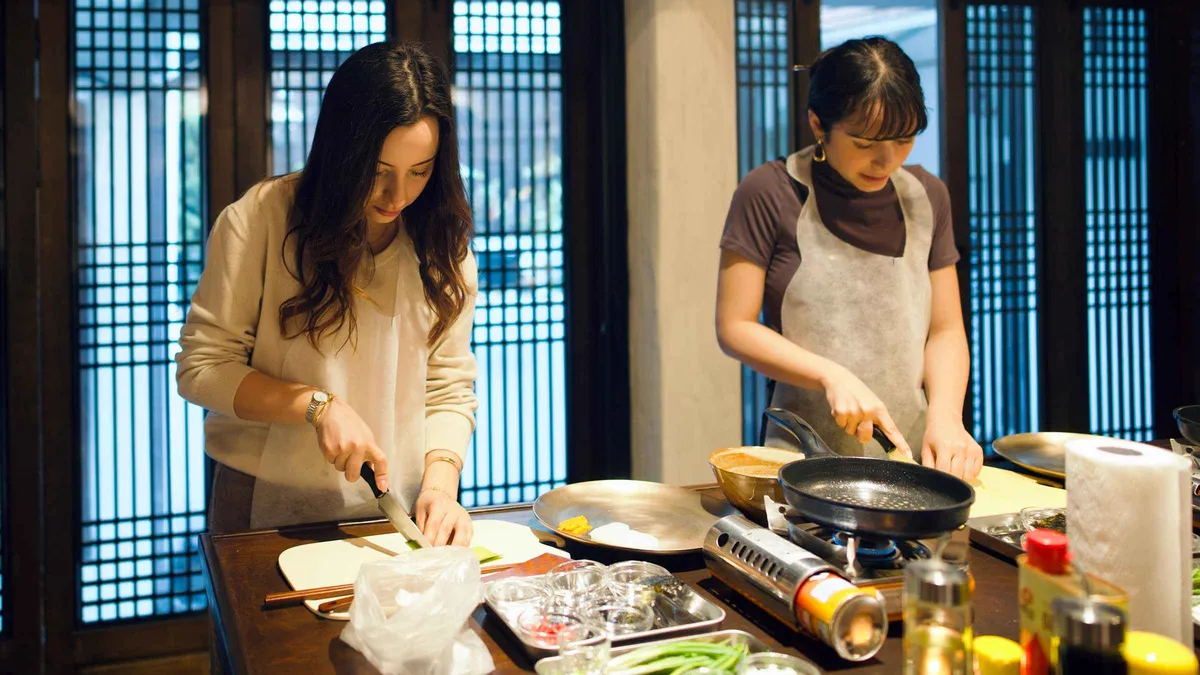 from $102.40
Seoul: Royal Seoul Cooking Class in a 100-Year-Old Hanok
Learn to cook iconic Korean dishes in a 1930s Hanok near Gyeongbokgung. Enjoy a meal in a cozy setting with a max of 6 guests, guided by expert.
Check AvailabilityPrices, ratings and details are the platform's own. Dollar figures are the listed prices. The platform bills in your account's currency.
Temple Questions
Are Seoul's temples free?
Yes. Jogyesa and Bongeunsa both charge nothing, and neither keeps the museum closing days. A templestay is a separate booking with its own modest fee.
Which temple should I visit in Seoul?
Jogyesa if you are in the old quarter — it is five minutes from Insadong. Bongeunsa if you are crossing the river, because it pairs with Starfield Library and the tower.
What is a templestay?
An overnight programme at a working temple: temple clothes, a tea ceremony, evening chanting, a mat on a heated floor, vegetarian meals and a dawn service around 03:30 or 04:00. English-language programmes exist at both central temples.
When is the lantern festival in Seoul?
In the weeks before Buddha's birthday, which falls in May. Jogyesa's courtyard is hung with thousands of paper lanterns and a parade runs through the surrounding streets.
Can I enter the temple halls?
Yes, quietly. Remove your shoes at the step, sit at the back, do not photograph people at prayer, and do not walk through the middle of a service.
Is Bongeunsa worth crossing the river for?
With Starfield Library five minutes away and Lotte World Tower twenty minutes east, yes — the three together make one worthwhile afternoon in Gangnam.
Can you wear shorts in Korean temples?
Yes. Korean Buddhist temples have no formal dress code for visitors, unlike some temples elsewhere in Asia. Remove your shoes at the step of any hall you enter and keep quiet during services.
What is the most famous shrine in Seoul?
Jongmyo, the royal ancestral shrine, UNESCO-listed in 1995 — one unpainted hall a hundred metres long above a stone courtyard, and the most austere space in the city.
What is the number one religion in Korea?
Around half the population reports no religion; among those who do, Protestant Christianity, Buddhism and Catholicism are the largest, which is why a Buddhist temple can sit opposite a convention centre without either seeming out of place.
The Temples on Video
Jogyesa and Bongeunsa filmed, lanterns included.
[Secret Korea - Seoul] Ep. 24 Bongeunsa•Jogyesa / YTN (Yes! Top News)
Video: YTNExploring Jogyesa Temple: A Must-See in Seoul, South Korea! 🇰🇷
Video: Jason Yoder[4K Korea] Visit the Buddhist Central Museum at Jogyesa Temple in Jongno
Video: Seoul Korea StreetVideos are other people's work, embedded for context; nothing here is sponsored.
Prices, hours and terms are set by the venue or operator and confirmed at checkout.
We may earn a commission if you book through one of our links, at no extra cost to you. Full affiliate disclosure