 Seoul City Guide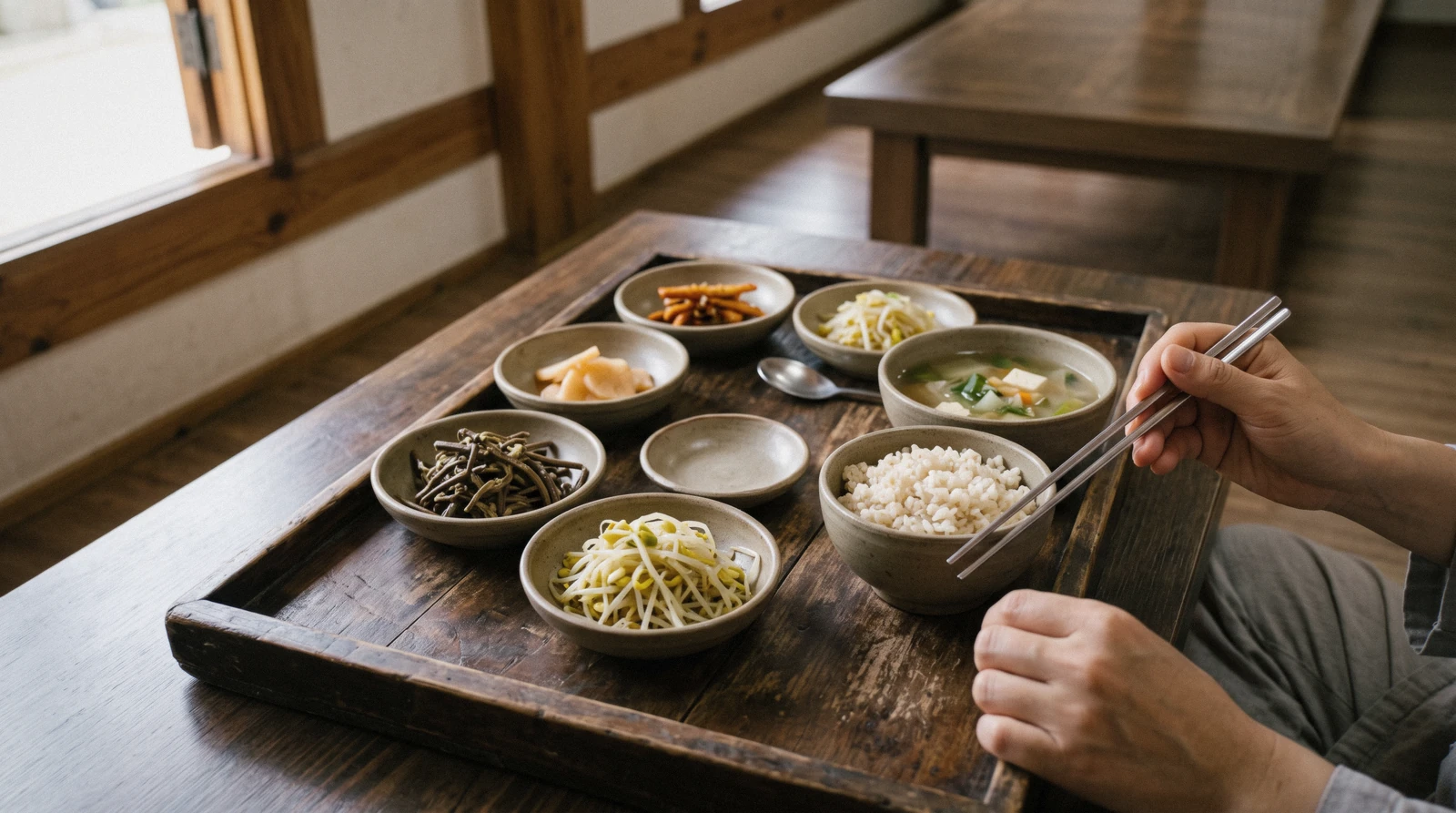
Vegetarian and Vegan in Seoul: Harder Than It Looks
Vegetarian Seoul is a real problem rather than a preference: anchovy stock, fish sauce and shrimp paste sit inside dishes that look entirely plant-based, including most kimchi. This page carries the phrases that work, the dishes that are genuinely safe, where temple food is served and what to book. The rest of the eating is on the where to eat page, and for the rest of the city see things to do in Seoul.
Quick answer The problem is stock, not meat
Korean cooking uses anchovy stock, fish sauce and salted shrimp the way other cuisines use salt, which means a plate of vegetables can still contain fish. That includes most commercially made kimchi. Eating vegetarian in Seoul is entirely possible, but it requires naming the problem rather than asking for 'no meat' — and the reliable ground is Buddhist temple cuisine, which excludes animal products by doctrine.
Key takeaways
- Learn one sentence: gogi, saengseon, jeotgal da bbaejuseyo — no meat, no fish, no fermented seafood.
- Temple food (sachal eumsik) is the safe category, and Jogyesa in Insadong is the district where it is easiest to find.
- A vegetarian market food tour exists and is the single most useful booking a vegetarian can make here.
What Is Actually Safe
Common dishes sorted by whether they are reliably vegetarian, usually contaminated, or need one question first. Compiled from standard Korean recipes and menus we checked in Q3 2026.
| Dish | Status | What to ask |
|---|---|---|
| Bibimbap | Ask first | Often contains beef and a fried egg; both can be left out. Gochujang is fine |
| Temple food set | Safe | Excludes meat, fish and the five pungent vegetables by doctrine |
| Kimchi jjigae | Usually not | Made with pork and a stock base; the kimchi itself often contains fish sauce |
| Japchae | Ask first | Sweet-potato noodles with vegetables — frequently has beef and sometimes egg |
| Kimbap | Ask first | Standard rolls contain ham and egg; vegetable-only versions are common |
| Doenjang jjigae | Usually not | Soybean stew, but the stock is generally anchovy |
| Pajeon | Ask first | Spring-onion pancake; the batter often contains egg and the dipping sauce fish |
The recurring problem is stock rather than visible ingredients. A dish that arrives with no meat in it can still have been built on anchovy broth, which is why the phrase above names the stock explicitly.
Temple Food Is the Reliable Answer
Korean Buddhist temple cuisine — sachal eumsik — is a formal tradition with rules: no meat, no fish, no dairy in most interpretations, and no garlic, onion, spring onion, chive or leek, which are held to disturb the mind. What is left is vegetables, mushrooms, roots, seaweed, fermented pastes and rice, prepared with a great deal of technique.
It is served as a set: a tray of small dishes, a clear soup, rice and a fermented element, for roughly ₩15,000 to ₩30,000 depending on the restaurant. Lunch is the usual service and the better places take reservations.
The area around Insadong and Jogyesa, the head temple of the Jogye Order, is where temple restaurants concentrate, which makes it a convenient lunch between the palaces. Several temples also run a templestay programme with meals included — an overnight version of the same food. More on Seoul's temples.
One caution: the no-garlic-or-onion rule means temple food tastes different from restaurant Korean food. That is the tradition working as intended, not a compromise.
The Phrases That Work
'I am vegetarian' translates but does not communicate, because the category is unfamiliar in many kitchens and is often heard as 'no red meat'. Naming the ingredients works far better.
The sentence to use is gogi, saengseon, jeotgal da bbaejuseyo — please leave out meat, fish and fermented seafood. For vegan, add gyeran-do, uyu-do — no egg, no milk.
Two more are worth having. Yuksu-neun gogi-guk-i-eyo? asks whether the broth is meat-based; chaesik jusikjeom is the term for a vegetarian restaurant. Papago handles all of these accurately if you would rather show a screen than pronounce them.
What does not work is expecting substitutions in a restaurant built around one dish. A barbecue place cannot feed you and a kalguksu counter cannot change its broth. Choose the restaurant, then order — not the other way round.
Where to Eat, District by District
Insadong and the streets around Jogyesa are the strongest area, because temple cuisine has a natural home there and several restaurants specialise in it.
Itaewon and Hannam have the broadest international choice: Indian, Middle Eastern and Mediterranean kitchens where vegetarian dishes are ordinary rather than an accommodation. This is the reliable fallback when Korean options run out.
Hongdae and Seongsu have the young vegan cafés — plant-based burgers, bakeries, brunch — at ₩10,000 to ₩18,000, aimed at a domestic audience that has grown quickly in the last decade.
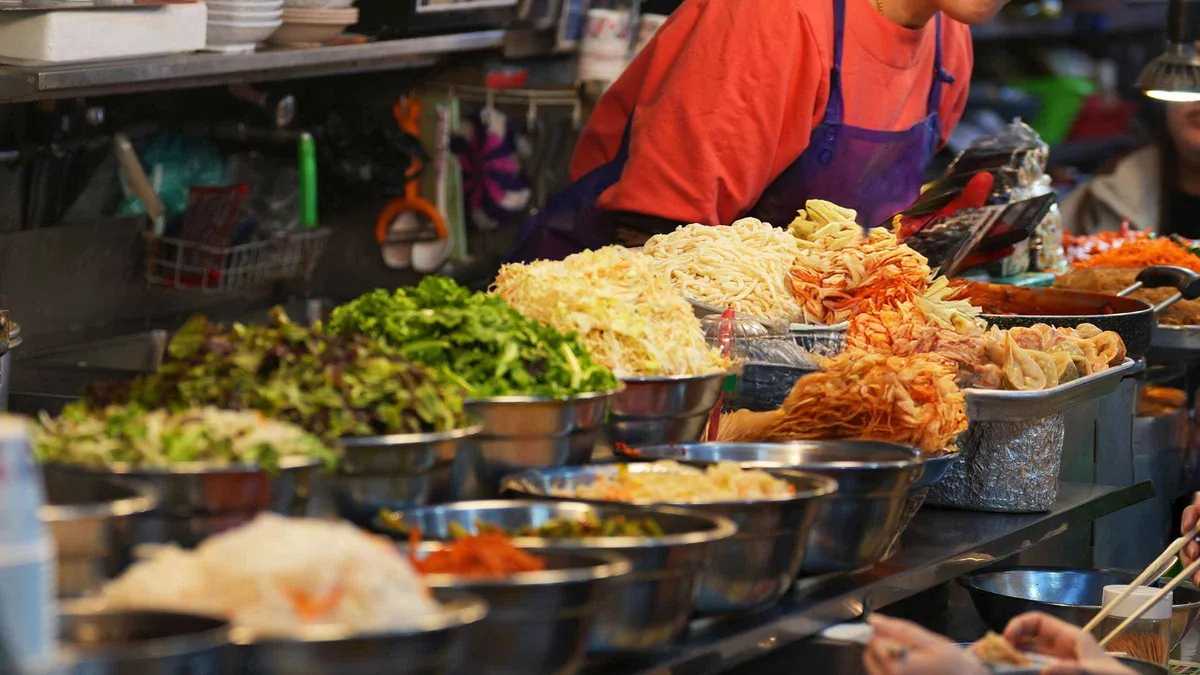
At Gwangjang Market the picture is mixed: bindaetteok is mung bean and vegetables and is usually safe, the vegetable kimbap is straightforward, and almost everything in a bowl is not. A dedicated vegetarian market tour runs there for about $89 and exists precisely because the navigation is hard.
Convenience Stores and the Practical Floor
When a day goes wrong, the convenience-store shelf is the reliable floor: triangle kimbap with vegetable fillings, plain rice, instant noodles whose packets list ingredients in English, fruit, nuts, soy milk and increasingly a plant-based ready-meal section.
Supermarket kimchi labelled vegan exists and is stocked in the larger stores; the standard product almost always contains fish sauce or salted shrimp.
Bakeries are widespread but heavy on butter, milk and egg, so a vegan breakfast usually means fruit and soy milk rather than pastry. Coffee shops all carry oat or soy milk as standard and charge ₩500 to ₩1,000 extra, which is the same as anywhere else in the world.
What to Read Next
Three pages that carry on from here.
Where to eat in Seoul
The city's eating sorted by meal and price: where to eat.
- Market lunch ₩8,000–₩15,000
- Side dishes always free
- Naver Map beats Google for reviews
Seoul temples
Jogyesa, templestay and where temple cuisine is served: Seoul temples.
- Free to enter
- Templestay bookable
- Lunch service, not dinner
Food tours
Including the vegetarian market walk: Seoul food tours compared.
- 2 hours
- Vegetarian route exists
- Ordering done for you
Bookings That Solve the Problem
Two listings that make vegetarian eating easy — a dedicated vegetarian market tour and a cooking class where you choose what goes in. Ratings and prices are the operators' own figures.
 from $89
Seoul: Gwangjang Market Vegan & Vegetarian Food Tour
Explore Gwangjang Market like a local on a vegetarian food tour in Seoul. Taste a range of vegetarian and vegan versions of Korean classics and learn about the stories behind each.
Check Availability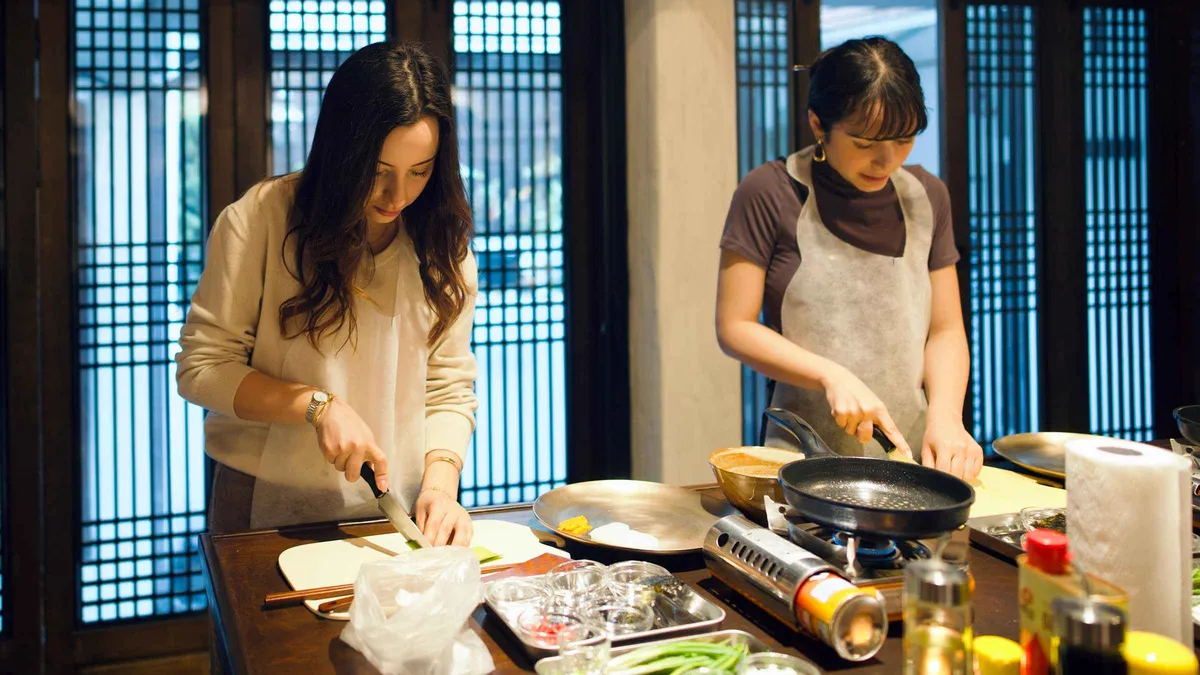 from $102.40
Seoul: Royal Seoul Cooking Class in a 100-Year-Old Hanok
Learn to cook iconic Korean dishes in a 1930s Hanok near Gyeongbokgung. Enjoy a meal in a cozy setting with a max of 6 guests, guided by expert.
Check AvailabilityPrices, ratings and details are the platform's own. Dollar figures are the listed prices. The platform bills in your account's currency.
Vegetarian Questions
Is it hard to be vegetarian in Seoul?
Harder than the menus suggest. Anchovy stock, fish sauce and salted shrimp appear in dishes that look plant-based, including most kimchi. It is manageable with the right phrases and by choosing restaurants deliberately.
Is Korean kimchi vegetarian?
Usually not. Standard kimchi contains fish sauce or salted shrimp. Vegan kimchi exists, is sold in larger supermarkets and is served in temple restaurants, but it has to be asked for by name.
What is Korean temple food?
Sachal eumsik: Buddhist monastic cuisine with no meat, no fish and none of the five pungent vegetables. It is served as a set of small dishes for about ₩15,000 to ₩30,000, usually at lunch.
How do I say I am vegetarian in Korean?
Naming ingredients works better than the category: gogi, saengseon, jeotgal da bbaejuseyo — no meat, no fish, no fermented seafood. Add gyeran-do, uyu-do for vegan.
Is bibimbap vegetarian?
Not by default — it usually comes with beef and a fried egg, both of which can be left out on request. The gochujang served with it is fine.
Vegetarian Seoul on Video
Finding plant-based food in a broth city, filmed.
5 BEST Vegan Restaurants in Seoul You Can’t Miss! (2026 Guide)
Video: Krystal & EricBest Vegan Food in Seoul, South Korea | Seoul Vegan Food Guide & Tour
Video: Wanderlust WellmanTraveling South Korea Vegetarian/Vegan (+Allergy Guide & Secret Maps!)
Video: GAMJA IN SEOULVideos are other people's work, embedded for context; nothing here is sponsored.
Prices, hours and terms are set by the venue or operator and confirmed at checkout.
We may earn a commission if you book through one of our links, at no extra cost to you. Full affiliate disclosure