 Seoul City Guide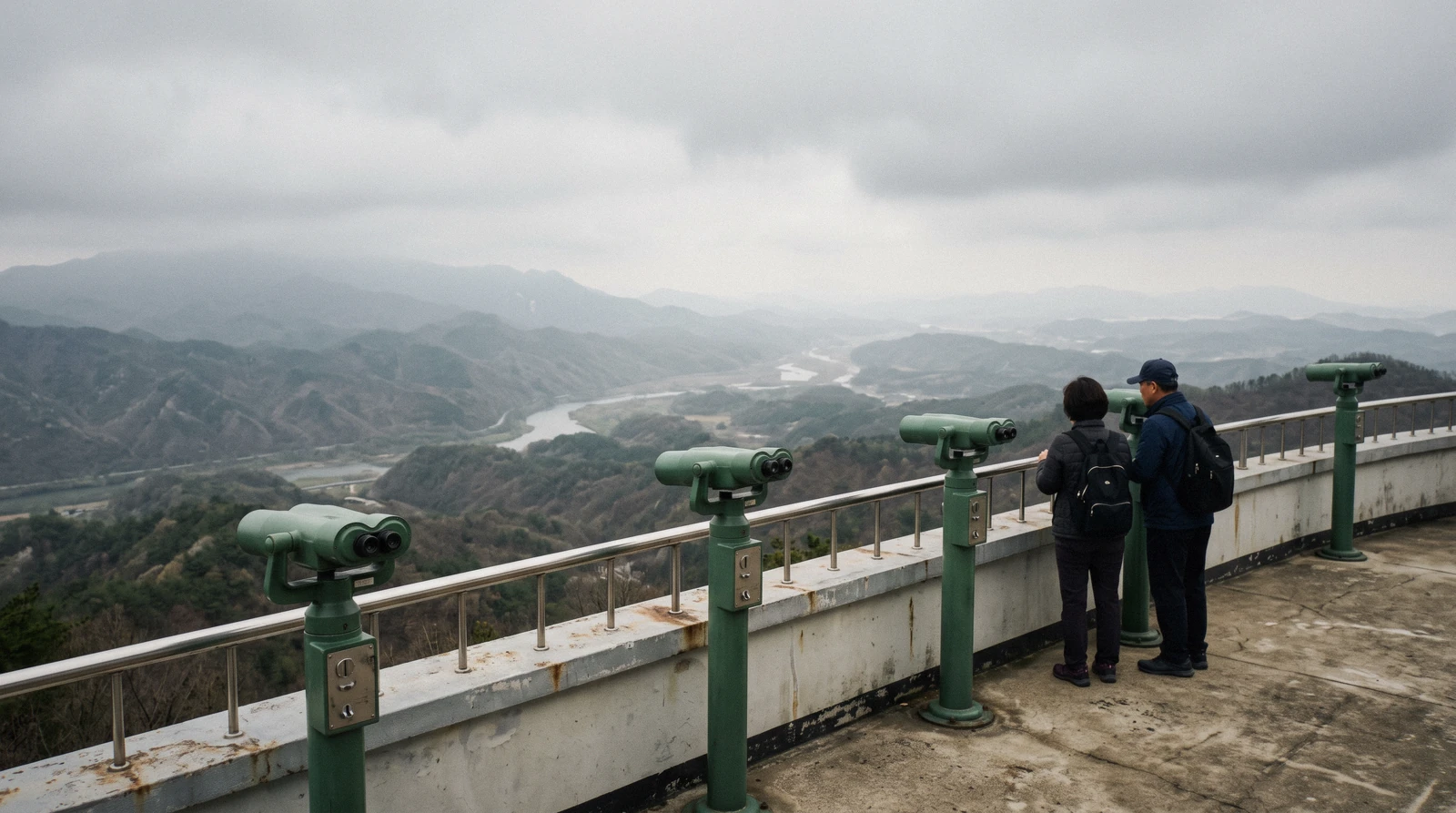
DMZ Tours From Seoul: What You Can Actually Visit
A DMZ tour from Seoul is the only way to reach the border — independent visits are not possible — and the part most guides still get wrong is the difference between the DMZ tours that run daily and the JSA at Panmunjom, which civilians have not reliably reached since 2023. This page carries what each includes, the prices and what to bring. For the rest of the trip, see what to do in Seoul.
Quick answer Tours only, from about $45 — and JSA is a different thing
The Demilitarised Zone is a four-kilometre-wide strip running the width of the peninsula, and the only civilian access is on an organised tour with passport details registered in advance. The tours that run daily go to the Third Infiltration Tunnel, the Dora Observatory and Imjingak, from about $45. The Joint Security Area at Panmunjom — the blue huts where the two sides face each other — is a separate permission, and civilians have not reached it on any reliable schedule since 2023.
Key takeaways
- Book two or three days ahead, more in October. Take your passport: names and numbers are registered with the military.
- Do the War Memorial of Korea first. The border makes very little sense without the war that produced it.
- Any listing promising the JSA should be read carefully — access can be withdrawn on the day, and no operator can guarantee it.
Key facts
Opening hours
| Tours | 07:00–17:00 |
|---|
Closed Tours do not run on Mondays at several sites, and access is suspended at short notice for military or political reasons.
Admission
- Adult
- From about $45 for a half-day tour
- Reduced
- Full-day tours with more stops from about $50
- Free
- Nothing — this is the one part of Korea you cannot see for free
Planning it
- Time needed
- Seven to nine hours including transport
- Book ahead
- Essential — weeks ahead
- Address
- Paju and the border area, about an hour north of Seoul
What the Standard Tour Includes
The stops on a typical DMZ day tour from Seoul, in the order they are visited, with what each actually is. Compiled from the operators' own itineraries, checked in Q3 2026.
| Stop | What it is | Time there |
|---|---|---|
| Imjingak | A park at the edge of the civilian control line with the Freedom Bridge and a memorial altar | 30–45 min |
| Third Infiltration Tunnel | A tunnel dug south by North Korea, discovered in 1978; you walk down a steep access ramp | 45 min |
| Dora Observatory | A hilltop deck looking north over the zone to a North Korean village and, on a clear day, Kaesong | 30 min |
| Dorasan station | A station built for a line that runs no further; the platform sign reads for Pyongyang | 20 min |
| Unification Village or a suspension bridge | Varies by operator — a farming village inside the control zone, or the Gamaksan bridge | 30–45 min |
The tunnel involves a long, steep walk down and back up; helmets are issued and cameras are not allowed inside. Anyone with mobility difficulties should ask the operator before booking.
The JSA Question, Answered Plainly
Panmunjom — the Joint Security Area, with the blue conference huts straddling the line — is the image most people have of the DMZ. It is also the part that has been effectively closed to ordinary tourists since 2023, when an American soldier crossed the border during a civilian tour.
Since then access has been intermittent at best. Occasional windows open when conditions allow, individual operators run one-off trips, and then access closes again. There is no schedule a visitor can plan a trip around, and same-day cancellation is a normal outcome even for tours that were confirmed.
So: if you see a listing selling the JSA, read the terms. A reputable operator will state clearly that access depends on military permission and that the itinerary reverts to the standard DMZ stops if permission is not granted — which is the honest version.
The practical answer for a 2026 trip is to book a standard DMZ tour, treat the tunnel and the observatory as the substance, and regard any JSA access as a bonus that will probably not happen.
What the Day Is Actually Like
You are collected in central Seoul between seven and eight in the morning, and the coach reaches the civilian control line in about an hour. Passports are checked, sometimes twice, and a soldier boards the bus at the checkpoint.
The tone is not what people expect. The tunnel is a long concrete slope with a low ceiling and cold air; the observatory is a viewing deck with coin binoculars and a large car park; the station is a modern building with almost nobody in it. There are gift shops. Between the stops you sit on a bus.
What gives the day its weight is the specificity — that the far ridge is another country, that the village visible from the observatory is a real place, that the railway line was built to be used and has not been. The guides, several of whom bring a defector or a retired officer to talk, are the difference between an interesting day and a series of car parks.
Dress for standing outside. Photography is restricted at several points and the restrictions are signposted and enforced; do not test them.
The Tours We Track
Both DMZ routes in our catalogue, with the operators' own prices, lengths and ratings as listed on GetYourGuide. There is no ticket-office alternative — independent access does not exist.
Do you want the standard border route, or the one that comes with somebody who crossed it?
| Option | Price | Length | What it adds | Book |
|---|---|---|---|---|
| Third Tunnel and suspension bridge tourA first border day; the bridge is an option, not a given | from $45 | 7–9.5 hours | The standard route with a bridge option; private upgrade available | Check Availability |
| DMZ insider tour with defector Q&AAnyone who wants the politics as well as the fence | from $50 | 7–9 hours | A North Korean defector travels with the group and takes questions | Check Availability |
Prices are per person and set by the operator; ratings are the operators' own figures. Passport details are registered in advance for both.
Practical Rules
Passport, not a copy. Names and numbers go to the military in advance, and the physical document is checked at the control line. Bookings made without the correct details are cancelled.
Nationality restrictions exist. Some tours cannot accept holders of certain passports, and the operator will say so at booking; this is a military rule rather than an operator preference.
Dress code applies at some sites, in practice meaning no ripped clothing or military-style dress. It is enforced inconsistently but it is real.
Under-tens are refused on some routes and the tunnel is unsuitable for small children in any case.
And tours are cancelled. Weather, exercises, political events and inspections all close the area at no notice; operators refund but cannot reschedule at will. If the DMZ matters to you, put it early in the trip so there is room to try again — and read the war that made it first.
DMZ on the Map
Pinned at the entrance, with the pages for what is nearby.
Before and After
Two pages that make the day worth more, and one alternative if the tour is cancelled.
War Memorial of Korea
Two free hours that make the border legible: the War Memorial.
- Free
- Closed Mondays
- Do it the day before
Suwon Hwaseong
If the DMZ falls through, the other big day out: Suwon's fortress.
- UNESCO listed
- ₩1,550 to get there
- Half a day
Day trips from Seoul
Everything else within reach: day trips.
- Nami Island
- Everland
- Busan by KTX
Both DMZ Routes
The two tours compared above. Ratings and prices are the operators' own figures.
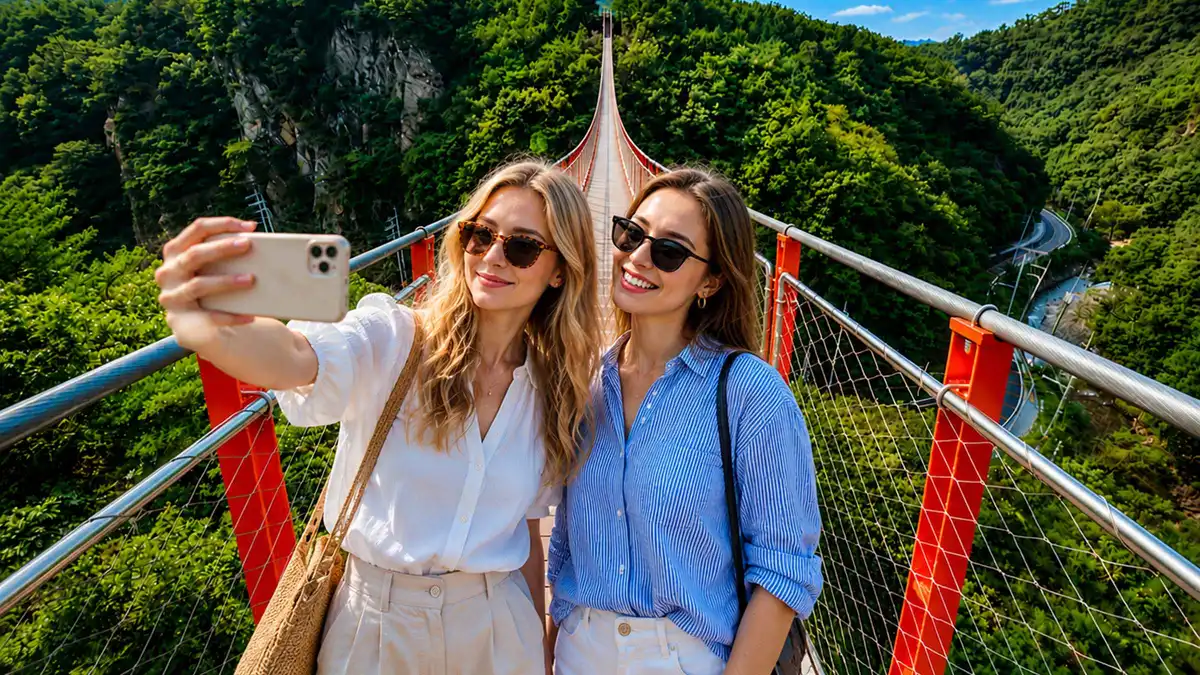 from $45
Seoul: DMZ, The 3rd Tunnel and Suspension Bridge Tour Option
Take a guided tour from Seoul to explore the DMZ, the 3rd Infiltration Tunnel, Dora Observatory, and the Mt. Gamak Suspension.
Check Availability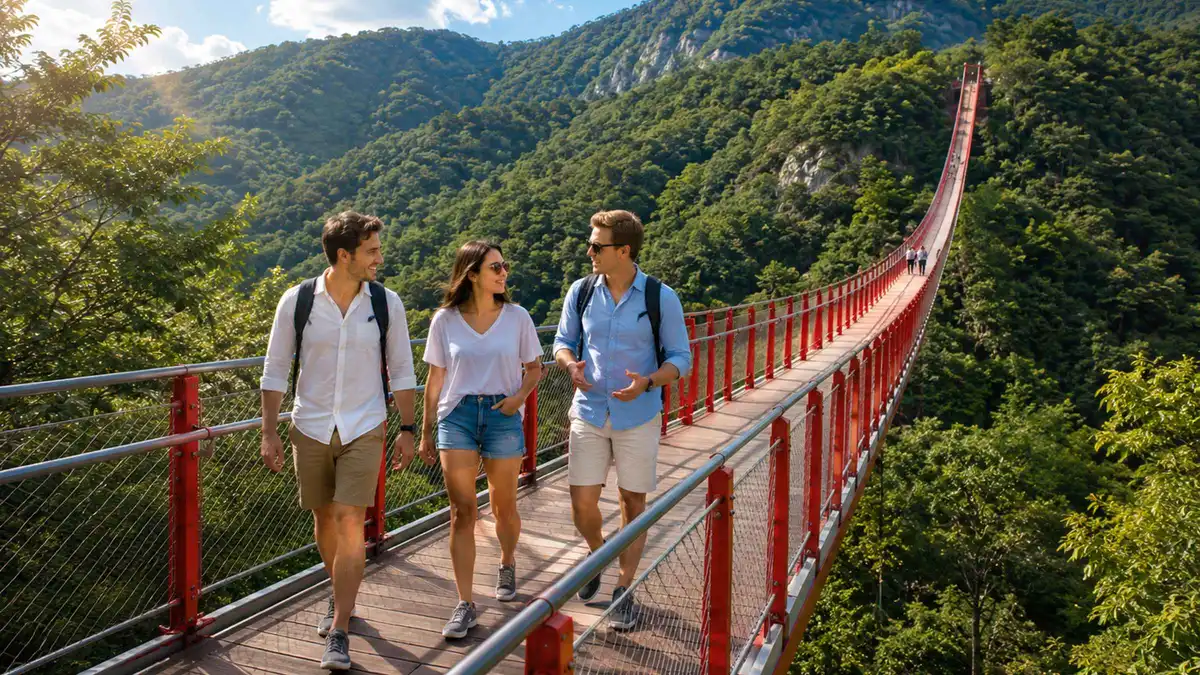 from $50
DMZ Insider Tour: Defector Q&A, 3rd Tunnel & Bridge Options
The original creator of the DMZ + Suspension Bridge tours. Visit North Korea Experience Center, meet a North Korean defector, join a live Q&A, walk through the 3rd Tunnel and see North Korea up.
Check AvailabilityPrices, ratings and details are the platform's own. Dollar figures are the listed prices. The platform bills in your account's currency.
DMZ Questions
Can I visit the DMZ without a tour?
No. Civilian access to the border area requires an organised tour with passport details registered in advance; there is no independent route and no ticket office.
How much does a DMZ tour cost?
From about $45 for the standard route, or about $50 for versions that include a North Korean defector talking to the group. Both run seven to nine hours including transport from central Seoul.
Is the JSA at Panmunjom open?
Not reliably. Civilian tours have been suspended since the 2023 border incident, with only intermittent access since. Listings promising the JSA should state that permission can be withdrawn on the day.
What do you actually see on a DMZ tour?
Imjingak, the Third Infiltration Tunnel, the Dora Observatory looking north over the zone, Dorasan station, and — depending on operator — a village inside the control zone or a suspension bridge.
Do I need my passport for a DMZ tour?
Yes, the physical document. Details are registered with the military in advance and checked at the control line; a photocopy is not accepted.
Are DMZ tours ever cancelled?
Regularly — for weather, military exercises, political events and inspections, often at no notice. Book it early in your trip so there is room for a second attempt.
Should I do anything before the DMZ tour?
The War Memorial of Korea, which is free and two hours. The border is difficult to read without the sequence of 1950 to 1953 that produced it.
The DMZ on Video
Filmed tours — the tunnel, the observatory and the mood of the day.
Stepping into a Forbidden Country: Our DMZ Tour Experience
Video: Window SeatIs the DMZ tour really worth it?
Video: The Muzza WuzzasNorth Korea is on the Way [ DMZ tour ] Travel Guide
Video: Travel RambleVideos are other people's work, embedded for context; nothing here is sponsored.
Prices, hours and terms are set by the venue or operator and confirmed at checkout.
We may earn a commission if you book through one of our links, at no extra cost to you. Full affiliate disclosure